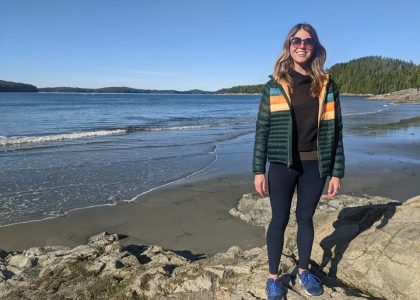
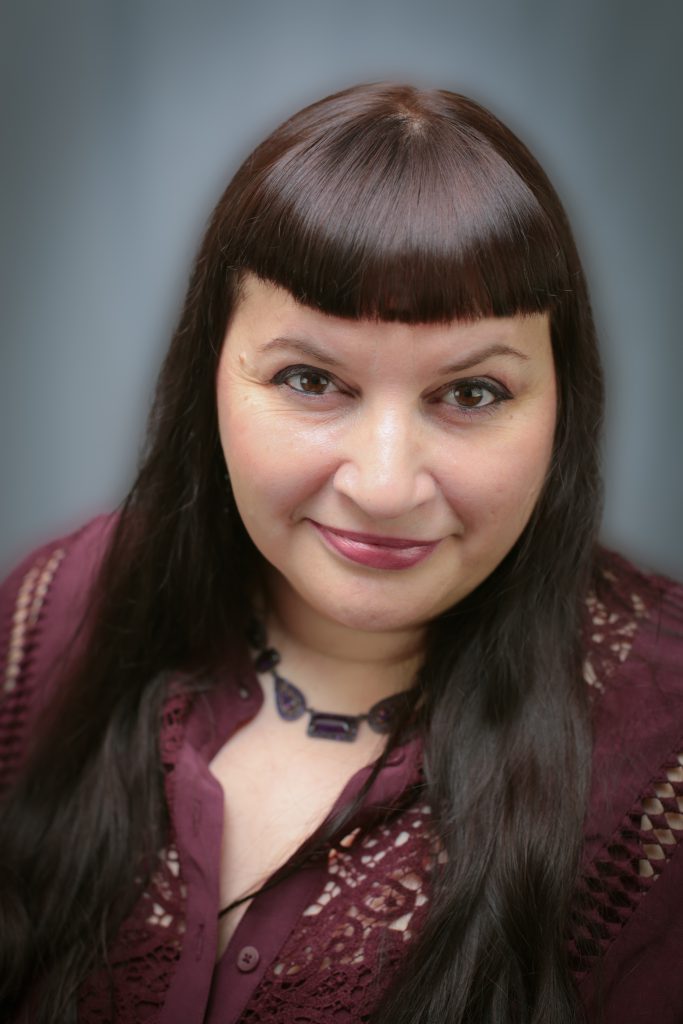
This December, Tellwell Publishing is shining a spotlight on one of our talented editors, Melanie. As part of the Tellwell editing team, Melanie works behind the scenes to support authors and guide them through the book-editing process, from manuscript development to final polish.
Get to know Melanie, learn more about what it’s like working with a professional book editor, and read her advice for authors preparing their books for publication.
Can you tell us a bit about your role at Tellwell Publishing and what a typical day looks like for you as an editor?
With the various editorial options that Tellwell offers its authors, my role as an editor takes many forms. Each dictates the depth of editing I will perform. Sometimes I get the privilege of being the first eyes on the book to give a brief summary based on a light perusal. I comment on the general shape of the manuscript and advise on the extent of edits that would be most useful to the author. At other times, I’m reading the manuscript in its entirety, looking at the overall structure and quality of a work to be able to deliver a manuscript assessment report, advising the author on the main points for improvement. Still other times, I’m drilling deep down into the manuscript in the form of a substantive edit to strengthen character arcs, conflict, plot points, tension, pacing, and flow. Or, in the case of a non-fiction manuscript, organization and presentation of ideas, instruction or theories. And finally, as a copy editor, I get to go on a treasure hunt, sussing out errors and inconsistencies in capitalization, spelling, and punctuation, and looking for grammatical errors. Ultimately, I’m working hard to make sure the author is reaching their reader with a well-presented, structured story or argument that is professionally polished.
As far as what a typical day looks like for me, well, at any one time I can have any or all of the above types of editing on my task list. It’s these times, when I’m dealing with overlapping deadlines, that I have the freedom and room to choose what branch of editing best suits my mood that day, or I can tailor my day to doing a small job in the morning and a more in-depth job in the afternoon or vice versa. But no matter what my task list looks like, I’m always fully present and engaged in whatever manuscript I’m working on.
What inspired you to become an editor, and how did your journey in publishing begin?
That would have to be my lifelong love of reading and crafting stories. Throughout my childhood and beyond, I enjoyed nothing more than locking myself away from all responsibilities to dive into another world, whether I was reading about it or was the one creating it. Of course, in my teen years, I had to come to the stark realization that that’s not very practical, and one must earn a living. I hadn’t thought of editing at first, as my other love in those years was animals, so off I went to dog-grooming school and spent the next ten years as a pet groomer. When a back injury ended that career, I was looking for something a little less physical. By then I was married and raising a family, so I started freelance writing for pet magazines and publishing general knowledge articles on the web for cash while I stayed home and raised my kids. This is when the desire to be an editor started to take hold. I was spending a lot of time in the writing community and beta-reading stories and novels for my fellow writers. I so enjoyed this work that I was soon looking around for a correspondence course in editing so I could continue to stay home and see my kids through their final years of high school. It took me a few years to find one, but finally I did find a course through Simon Fraser University, and after two years of schooling in editing, I earned my editing certificate, with an additional three years of unofficial editing under my belt. An added bonus in my early career was that I had my own manuscript accepted for publication with a traditional publisher, and I myself was subjected to a rigorous editing process, so I was able to step into an author’s shoes and see how it felt to have my work put under the microscope.
I believe this experience taught me how to be compassionate to an author who is feeling extremely vulnerable. After eight years in the role of editor, I can still say with confidence that it was a truly fulfilling career decision.
What do you enjoy most about working with authors at Tellwell?
My heart warms in thinking of an answer because the truth is, I adore working with the authors at Tellwell. They’ve come to Tellwell because they’re passionate about their projects and there is so much hidden talent among the ranks of our authors. There are many reasons an author chooses to publish with Tellwell, but I think the foremost reason is that they want all the professionalism and author care of a traditional house while maintaining ultimate control and calling the shots in their publishing journey. Sadly, for some, they have first collected rejections from agents and publishing houses. But judging from the number of talented authors I see, this goes to show you that a rejection doesn’t necessarily mean you don’t have the chops to play in the sandbox. I feel incredibly privileged that I get to work with talented authors every day, forming what I view as a partnership with a shared goal of giving a professional face to their vision while preserving their unique author voice. The subjects that our authors write about are wide, varied, and diverse, and the author brings their own unique slant. Although I know a fair bit about story development and organization, I’m always amazed at how much I learn about different subjects and ways of looking at things from our authors. I’m so proud of and inspired by the books I get to work on, and it fuels my own drive to put my words out into the public.
What are some common misconceptions authors have about editing that you often help clarify?
I think the biggest one is that by turning their manuscript over to an editor, the work is going to be changed so much that it will no longer sound like them. True, this is a legitimate concern, but I want to alleviate their fears and assure them that they are in the hands of someone who holds the view that author voice is king. I work to make sure that an author’s unique voice is maintained, while at the same time we find clearer ways of expressing things, where there’s a need to. An editor is not here to bulldoze or hijack their ideas and vision but rather strengthen them, polish them, and develop them so that they can fulfill their potential and result in the ultimate reader experience.
How do you handle situations where an author may feel unsure or overwhelmed by editorial feedback?
One of the hardest things about being an author going through the editing process is to try to discern what feedback is really going to serve your story and vision the best, and what isn’t. It’s good to remember that editors are only human and we aren’t the author, so we cannot fully know the nuances of their vision, their message, and what they ultimately want to say to the world with their story or book. So it’s up to the author to be able to discern what works to forward the vision that they have and what doesn’t. So one of the first things an author should do when they get their feedback is to read over the whole manuscript before they change one single letter then sit with these suggestions for a few days or a week, because an editor may identify a major hiccup in their story that’s going to take some time to work out how to resolve. I suggest getting a notebook and writing down the main points that their editor has identified as possible hiccups or places where more character development, conflict, or better pacing is needed (or more research and expansion in the case of non-fiction) and work them out on a piece of paper before heading back to their manuscript.
Sometimes, if an author feels overwhelmed by the suggestion of major changes, they try to cope by ignoring them and picking off the low-hanging fruit, like the easy changes to character, but this really is a mistake. Editing is typically known as harder than writing the first draft, so the best way to tackle edits is to prepare yourself for battle. Get lots of sleep, hydrate, put out some citrus potpourri (known for helping the brain stay alert) and dive in like the brave warrior they are. Organization helps. Making notes for yourself and having a clear vision of what you need to do is the armour an author needs to dive in successfully.
What advice would you give authors to help them get the most out of the editing process?
Please, communicate with us. We are here to help, to bounce ideas off, to learn more about you than what’s on the page so we can best serve you. So fill out the Editorial Questionnaire with as much detail as you can, especially the part about what you’d like from the editing process. I know it can be a vague question when you don’t know a lot about editing, but if you think about what you want the story to be about, what you want the characters to accomplish, and what you want the reader to explore, then it will be easier to guide the editor in their task. For example, if you wrote a romance, and you want the reader to walk away feeling that love after loss is worth it, it’s worth putting your heart on the line again, then you can let the editor know that is what you want the reader to take away. Armed with that knowledge, the editor will read your book with that view. Are you making that point strongly enough? They will double-check that for you. So take the time and really contemplate your goals with the book, then let the editor know.
Also, I can’t recommend a consultation enough. This “in-person” video meeting of the minds does so much to help you align with your editor in an exchange of energy that the page just can’t bring.
Third, responding to editor comments in the manuscript makes an editor’s day. We LOVE hearing from our authors on our suggestions. We love questions. Return comments don’t have to be verbose. Just a simple “Yes! I love this idea” on a few of our suggestions lets us know we are vibing with you. Or a few polite, “Not exactly where I was going with this” will really help us understand you and your manuscript to suggest an alternative. Editing is a communication, a partnership, so let’s have a meeting of the minds.
How do you balance improving structure, clarity, and consistency while staying true to the author’s voice?
I addressed this above, but I’ll reiterate here. It’s possible to say things more clearly without “breaking character,” as we say in theatre. Structure and consistency aren’t likely to interfere with voice but rather only enhance content. When something needs to be added, I ask myself, “How would the author say it?” and I’ll try to emulate it. Generally, though, I guide the author to fill in the missing content in their own words after explaining what is needed.
Can you share a book, author, or project at Tellwell that you’re especially proud to have worked on?
Well, I’m proud to have worked on so, so many, but one of my favourite stories is Racing the Wild by Rosanna Andrea Freeken. It’s a lovely coming-of-age story about a teen boy, Chris, who is raised on a racehorse farm. After facing a lot of abuse at home, he makes the brave decision to protect himself and a young, unpredictable racehorse marked for destruction by escaping into the Australian bush. Not only is the story well written and full of tension, but the characters have so much depth, and Chris’s character arc is phenomenal. You can see him grow emotionally right in front of your eyes. This year, I was thrilled to also edit the sequel. I adore these characters and can’t get them out of my head!
When you’re not editing, how do you like to spend your time outside of work?
Well, my busy editing schedule doesn’t leave me much free time, but I’m trying to get better at that work-life balance.
Would you believe that after a hard day of editing, I like to read a book? Like I said, I love reading. Outside of that, I’m an avid gardener and an artist and author so I juggle my time between these pursuits. Recently, I’ve discovered the joys of colouring, which is doing a lot to help steer me back in the direction of my art without a lot of creative commitment (i.e., I don’t have to come up with the designs, just add colour.) I’m obsessed with discovering cool colouring books to colour while watching the Canucks win! 😉 Oh yeah, did I mention I’m a huge hockey fan?