A Journey Through Huntington’s Disease with Hope, Resilience, and Love
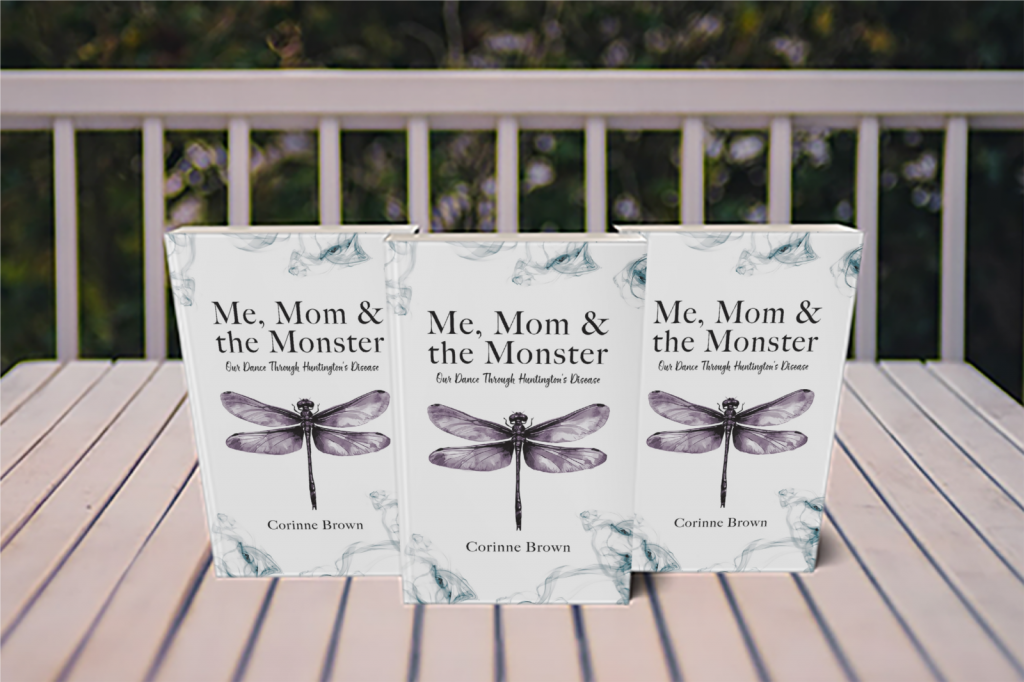
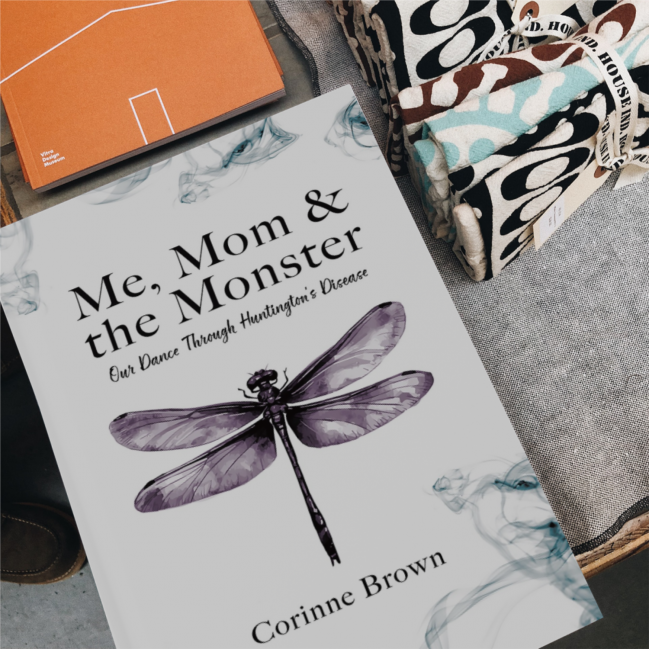
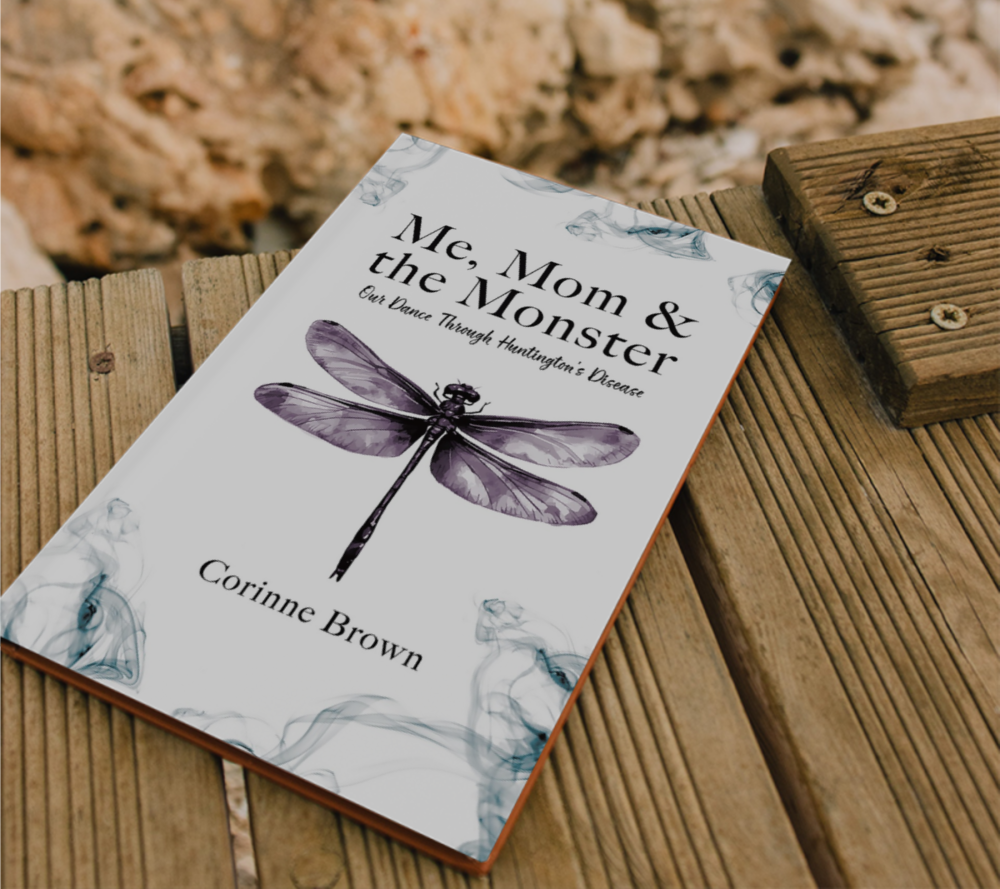
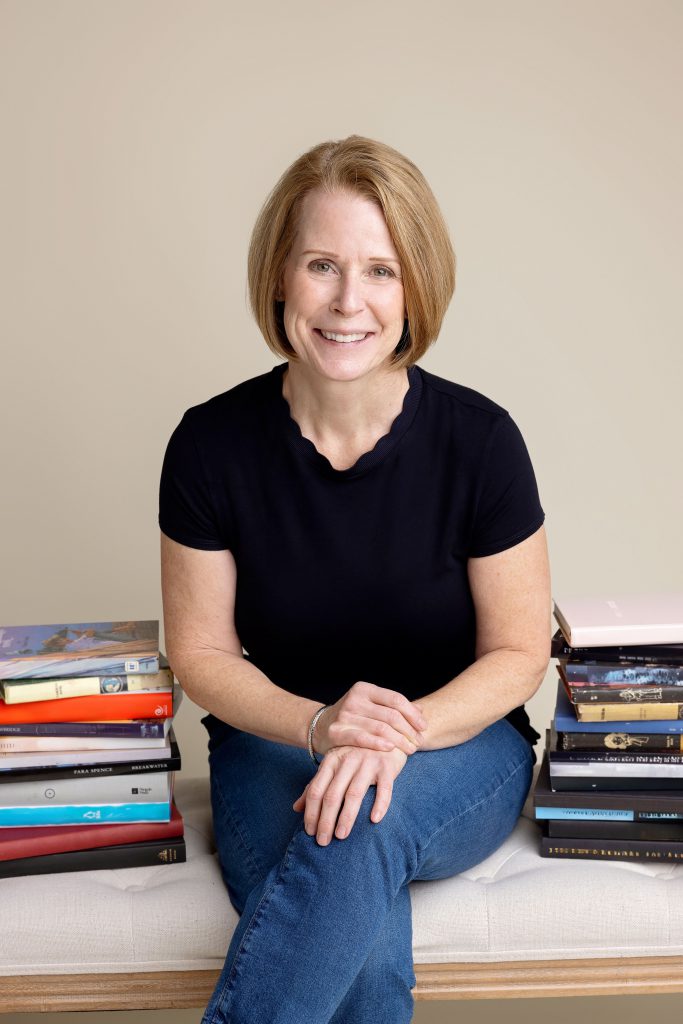
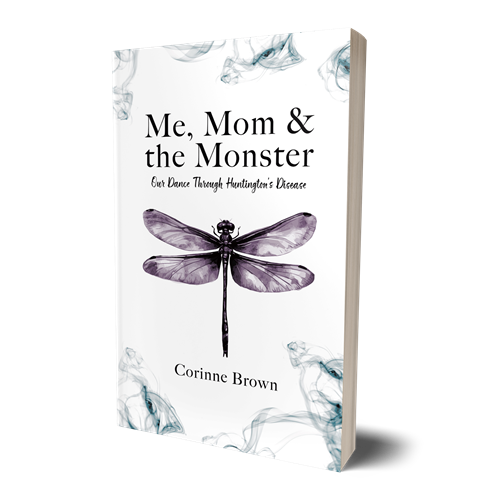
This month, we’re featuring author Corinne Brown, whose memoir Me, Mom & the Monster shares an honest and deeply personal look at caregiving, family, and living alongside Huntington’s disease. The book has earned five-star reviews from both IndieReader and Reader Views, a notable achievement that reflects its emotional impact and authenticity. In this Q&A, Corinne reflects on what inspired her to tell her family’s story, the challenges of writing such a personal book, and the hope that carried her through it all.
The story found me when the time was right.
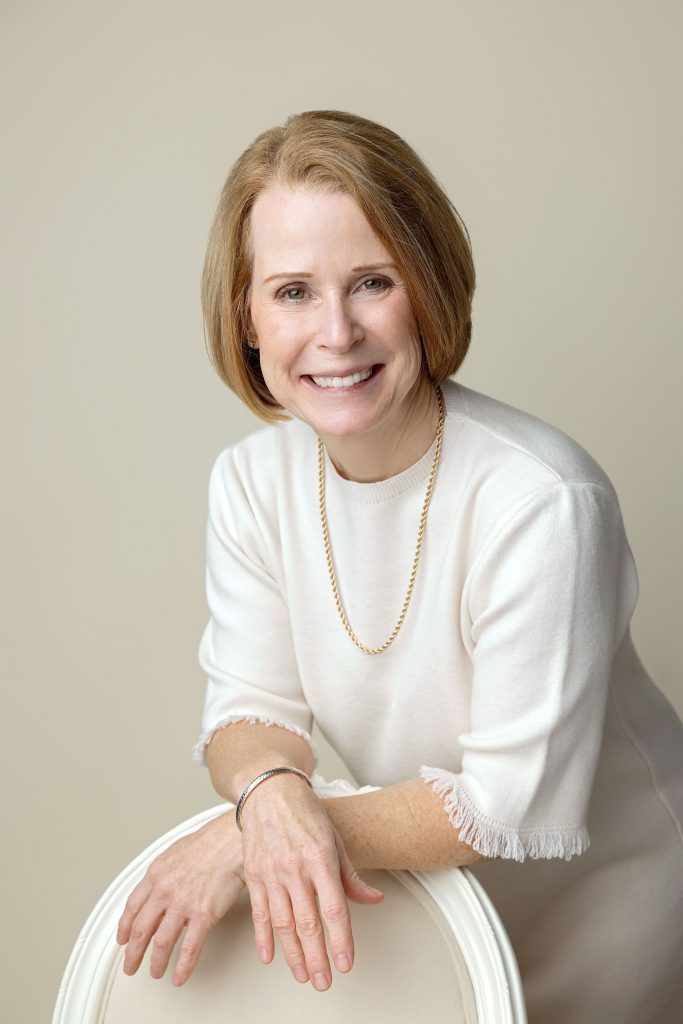
Corinne Brown
What inspired you to write Me, Mom & the Monster, and why did you feel now was the right time to tell your family’s story?
Naturally, the inspiration came from my mother, Mae. She lived with Huntington’s disease for almost 25 years, but she didn’t live it alone. Huntington’s disease is a family affair, particularly since it is genetic and the offspring of a gene-positive parent has a 50 percent chance of inheriting the disease. When I was 10 years old I told my Grade 4 teacher that I was going to write books when I grew up, but never in a million years would I have predicted it would be about Huntington’s disease, and especially not about something so deeply personal. I could not have written this story while I was in the throes of Huntington’s disease; I simply didn’t have the emotional or mental capacity to process what I was feeling. I was apprehensive about immersing myself back into the pain of my experience with the disease, but it quickly became apparent that what was inside me needed an outlet. I like to say the story found me when the time was right.
Your memoir is remarkably honest about feelings of anger, helplessness, and grief. Was it difficult to be so vulnerable on the page, and what do you hope readers take away from that honesty?
Without a doubt, this was the most difficult thing I have ever done. I am a private, introverted type of person, so sharing something so profoundly personal was a huge step outside my comfort zone. The first few days after the book was published, I was extremely emotional. Along with the relief that this three-and-a-half-year writing project was completed, I also felt completely exposed and more vulnerable than at any other time in my life. I wrote the book, worked through the edits, and signed off on the final copy, but I didn’t anticipate that people would read it! Once I started receiving some feedback, I felt I could exhale a little. Now that our story is out there, I wouldn’t have changed a thing.
I hope by sharing my vulnerabilities, and my innermost thoughts and feelings, that others may feel less alone in their experience with any life-altering disease.
Caregiving can take a tremendous emotional toll. Looking back, what advice would you offer to others who are caring for a loved one with Huntington’s disease or another progressive illness?
I am not comfortable nor qualified to give advice. What I did do in this book was to showcase the tremendous toll that caregiving can have on families and what my experience was. I was happy to do my part in our family for our mom, and as much as I struggled with her move into a long-term care facility, what that did allow for me was the chance to be her daughter again. For me, if I have to say something that may have made it better, it would be to be more open about how I felt and to seek counselling earlier than I did. Keeping all that anger and feelings of helplessness and guilt inside me was not the right move, but it was what I did. I recognize that now, but didn’t at the time. Writing this book has offered me a soothing balm for my wounded soul, too. Writing was something I always loved and was what I studied in post-secondary school, so returning to that was like coming home for me.
One of the book’s central themes is hope, even in the face of unimaginable hardship. Where did you find hope during your mother’s 25-year journey, and how has it shaped your life today?
Without hope, what is there? In the face of Huntington’s disease and other life-altering diseases, hope gives us something positive to hold on to. For me, my heavy emotional baggage included rage, guilt, helplessness, and despair, to name a few, but I always made room for hope. I needed to grasp something to help keep me afloat. I was always a glass-half-full kind of person, and I lost that a bit throughout my experience with Huntington’s, but it never completely disappeared. When I looked at my mother and thought of other Huntington’s patients and families around the world, how could I possibly not have hope? A treatment didn’t arrive in time for my mom, but I feel we’re closer than ever to having that momentous breakthrough. Some of the best and brightest minds in the world continue to work tirelessly towards a treatment, refusing to give up. If they’re not giving up, then how could I possibly give up hope?
My life has undoubtedly been shaped by my experience with Huntington’s disease. How could it not? I lived it with my mom for almost a quarter of a century, most of my adult life. It was just how it was, part of our family mosaic. Once my mom died, even though I was still at risk of inheriting the disease, I naively thought our time with Huntington’s was over. However, like Huntington’s does, it had other plans, and this story of Me, Mom & the Monster needed to be told. This is part of my life purpose: educating and bringing awareness to this rare disease through my writing. Hope? Yes, that will never leave me.
If readers could take away one message from Me, Mom & the Monster, whether they have been touched by Huntington’s disease or not, what would you hope stays with them long after they finish the book?
That life really is a beautiful gift, and the simplest of things brings the greatest pleasures.
What did you learn about the publishing process while working with Tellwell? Do you have a tip for first-time authors?
I knew a bit about the publishing industry through my journalism career and my involvement with writing groups. I knew enough that publishing wasn’t something I wanted to tackle on my own. My strength lies in writing, not in the details of publishing. I had diligently worked on the manuscript for more than three years, and I was proud of the work I had done on my own and with professional editors. It was important to me to have a polished product, something I would continue to be proud of in the years to come.
Advice for first-time authors? Never give up, stay true to what it is you want to write, never lose sight of your vision. Someone said to me, “You have a gift and you’re responsible for sharing it with the world.” So, for every writer out there, remember that. Your story, your voice. There’s a place for that in literature.
You can get a copy of Corinne’s critically acclaimed book on Amazon.
Visit CorinneBrown.ca for more updates.