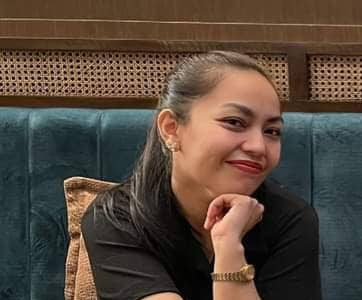
This April, we’re shining the spotlight on one of our talented editors here at Tellwell—meet Jen! She plays a key role in helping authors bring their stories to life, guiding them through the editing process with care, expertise, and a true passion for storytelling.
Read on to learn more about Jen and her role at Tellwell.
How did you get into professional editing?
Throughout my life, editing and I have taken turns finding each other.
In elementary school, unasked, I would politely point out any errors I noticed in my teachers’ written materials. In high school, people were always showing me their angsty love poems and love letters and asking if I thought they should send them or if they should change any of the wording first for greatest effect. I would advise them to take out the cliches and build on the specifics. In university, as a student of English Literature, I was the one everyone asked to edit their essays at 2 a.m. For a summer I taught English in Japan where, while waiting at an airport in Tokyo, a pilot sat down beside me and silently handed over a pile of papers and a pen. Through hand gestures and facial expressions, I grew to understand that he was asking me to edit his flight notes. I did so, happily. But how did the pilot know to ask me?
Following university, I went on to teach at the elementary level. When my children were born, I wanted to find a way to support my family financially while still looking after my girls full-time at home in those fleeting early years. So, I opened up a home daycare, which was so busy and so fun and of course included toppling towers of books and glorious rainy afternoons of storytime. But then my kids were starting school and I was craving time to read and think. One night in 2009 I happened upon an editor’s ad on Kijiji and I knew: This could be me! This is what I’m meant to do! I asked the editor a few questions about his work, and he kindly offered to mentor me as I started my own freelance editing business. Within a month or two, it took off, and I began editing a huge variety of material for academics, nonprofits, and creatives from all over the world. In late 2014, Tim Lindsay shared with me his great idea to start a publishing company. He asked if I’d be interested in some opportunities to work with authors who wanted their books edited, and I said “Yes!”
What are your responsibilities as a Tellwell editor, and what does a typical workday look like for you?
As a Tellwell editor, I am responsible for helping you through the process of forming the best possible versions of your books. Once I have accepted a new project, I begin by reading the author questionnaire where I learn about your goals for your book and for editing in particular. I consider very carefully what you have chosen to express to me here. I am always aware of the vulnerability that comes with sharing your writing and being open to feedback. I know this is terrifying, as what you write is part of who you are. As I begin editing, I read for a while without making any changes to give myself time to absorb the feeling of the book. Then, before long, my mind picks up on something that I find wonderful, or surprising, or intriguing, or confusing, and then I begin to write notes. I ask questions, offer suggestions, point out inconsistencies. When I am curious to know more, I know that your readers will be too, and so this is where I will encourage you to go deeper. When I begin editing a second draft, I am eager to see what’s new! And I am so often gratified to witness how you have come through by investing such creativity and care into your developments and revisions. Second drafts are a pleasure to edit.
Mornings are the most fruitful time for my mind, especially between my first and second cup of coffee, but I work whenever I can. A personal rule I have is to take a break from the screen every hour or every ten pages, whichever comes first. That’s when I will drive a kid to school, hang some laundry on the line, sit on the porch and call my mom, vacuum, prepare sourdough, or meditate with the cats. Then I return to my laptop, my mind clear and open for the next chapter.
What are the main elements you look for when starting a new edit?
When starting a new fiction edit, I look at how the protagonist is formed. I look for consistent characterization and vibrant setting, ripe with sensory detail. I identify what the conflict is. If there is no conflict, the story has no legs, and so I will work with you on this. I of course look at the language. Are you overusing a pet phrase? I will point out to you that words are more powerful when they are used in unexpected, rare ways. Are crazy things happening in the plot but we have no idea what your protagonist is thinking or feeling in response? Then I will ask you.
When starting a new nonfiction edit, I consider audience and intent. Is the information presented as clearly as possible? Are some bits a little murky? I will ask you to explain. Is the language overly technical when you are intending to write for those who are new to your subject? Then I will act as your newbie, wanting to understand, and I will ask you what I want to know.
What do you expect from authors when you begin working together on a manuscript?
When I begin working on a manuscript, I expect the author to be open to the editing process. I expect you to be willing to try some new things and take a few risks. I also expect you to hold firm to your original goals, as this will help you to make the best decisions while we revise and develop your manuscript.
What do you enjoy most about editing books?
Reading.
What genres do you most enjoy working on, and why?
I enjoy children’s books, as my background in teaching, home daycare, and parenting has prepared me well for knowing how children respond, what makes them laugh, what helps them learn. I like editing memoirs, as I am fascinated by people’s fascinating lives—especially those lives that appear from the outside to be quiet and unremarkable. Finally, I feel a strong draw toward dystopian fiction, especially post-apocalyptic. I like to imagine what it would be like for the world to start over, what we could finally get right the next time around.
What are some common misconceptions clients have about the editing process, and how do you address those concerns?
I tend to be very thorough in my editing process. Some authors may initially perceive the heavy markup to mean that your book is heavily flawed. But this is not at all what that means. It means that your text is rich, full of possibilities! I address such concerns by making sure to highlight for you all the examples of what specifically I find to be impactful and insightful in your writing. I encourage you.
Another occasional misconception clients have about the editing process is that my suggestions are meant for me, not you. Sometimes an author will write “Yes, do that” in response to my suggestion to add more details to a scene. Please know that I am inviting you to add new content, not asking you for permission for me to add new content. You are always the author. I address this concern by giving clear examples of how you could make changes or additions to the manuscript yourself.
What is your best advice for an author preparing to work with an editor for the first time?
Fear not. We are here to help. Even before I begin reading, I have a high level of respect for the authors because you are doing such a brave and wonderful thing. Know that in every book I read, I see something unique and good. My mission is to find this good kernel and help you grow it.
How important is open communication between the editor and the author, and what does that look like in practice?
Open communication between the editor and the author is vital. In practice, this communication begins with the author questionnaire where you can tell me your goals for your book and your reasons for writing it. I strive to honour your purpose for writing, whether this be to share what you have learned from your life experiences; or to tell a story that teaches, or entertains, or both; or to put the amazing ideas you see in your mind on the page for others to see too. I want to know all about your reasons. Then, as I read your book, I write down for you my thoughts, emotional responses, ideas, and questions. This process is intuitive for me. I will share with you through the comments in the margins my best sense of how your book could be developed further based on your goals and on how your writing affects me, your reader. When the manuscript is returned to you, this is your opportunity to read my communication and respond in turn by making changes and additions to the manuscript. You can also respond to my comments in the margins with your own insights and explanations. I will read these comments when the manuscript is returned to me for the second round of editing. Author-editor communication can also take place over an editing consult between the first and second round of editing. During this call, we can brainstorm and workshop our ideas together. The style sheet is another place where I communicate with authors, and you are able to communicate with me by adding to the Service Comments through Octavo or by asking your project manager to pass on your questions to me.
How do you handle feedback or pushback from authors who may be resistant to changes?
I trust that you know your own voice and the message you wish to convey in your writing. If the issue is one of clarity, it is possible that the author may not realize that what you are intending to say may not come across that way to your readers. As one of the first readers of your work, I will point out any areas where further development could better facilitate optimal reader comprehension. After that, the choice is yours to accept or decline my editorial feedback. I respect that.
What defines a great editor, in your opinion?
A great editor knows the right questions to ask.
What do you like to do when you’re not editing? Any fun hobbies or passions outside of work?
Believe it or not, when I’m not editing, I like to read.
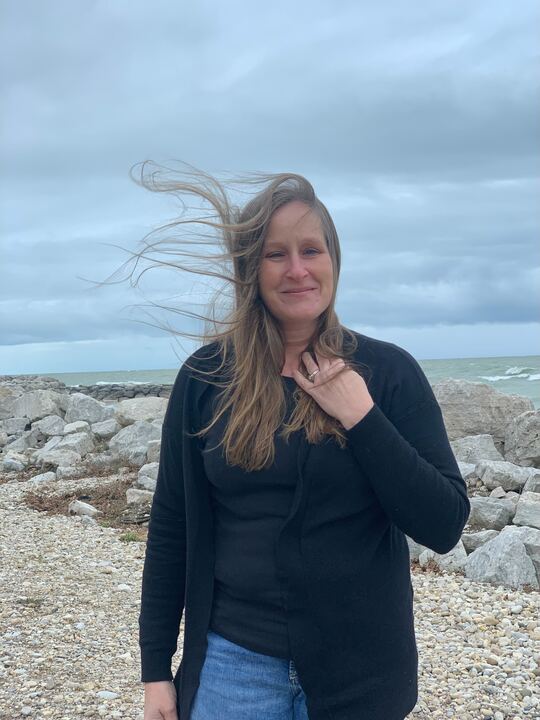
I love to spend time with my family. I have three daughters (one teen still at home) and a brand-new grandbaby to snuggle and breathe in. Two years ago, my husband and I manifested our dream of moving from the busy city to a lovely quiet beach town on Lake Huron. Last summer I swam at dawn every morning from June until October. My favourite moment was floating on my back while looking up at the Canada geese honking and migrating south in V-formation above me.
If you could give one piece of advice to every aspiring author, what would it be?
Trust yourself. Write for yourself, no one else, and then others will sense the authenticity in your work.