How one writer turned a lifelong love of words into her debut novel.
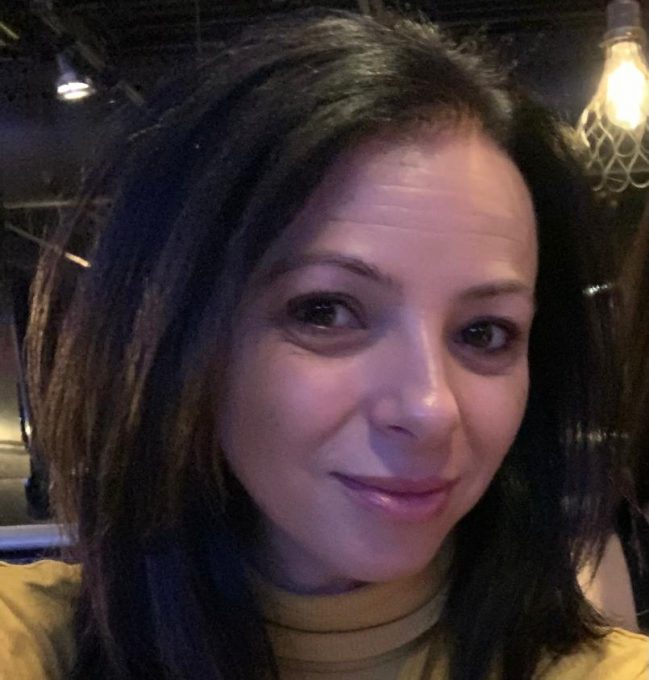
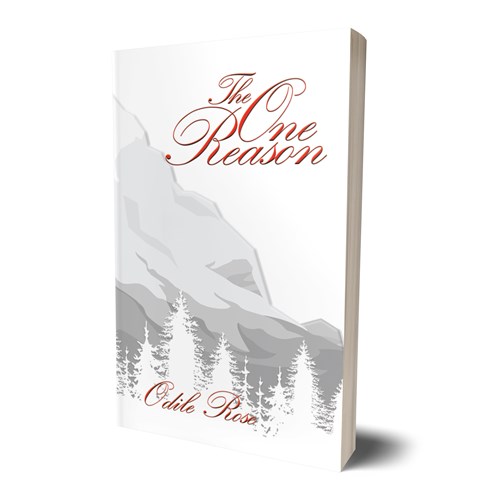
Born in Paris and raised across Canada, Odile Rose brings a rich cultural background and deep emotional insight to her writing. After spending nearly two decades in the financial industry, she took a leap of faith to pursue her lifelong passion for storytelling. Her debut novel, The One Reason, is a moving romance that explores fate, resilience, and the power of love in the face of loss.
In this interview, Odile shares how she approaches emotionally charged scenes, how her life experiences shape her voice, and what inspired her to begin her writing journey. She also discusses her creative process, her poetry on social media, and her experience publishing with Tellwell Publishing.
At forty, I told myself, “If not now, then when?” I knew I had to write the story that was still brewing inside of me.
Moonbeam Award Winner Shares the Personal Journey Behind a Beloved Three-Legged Hero
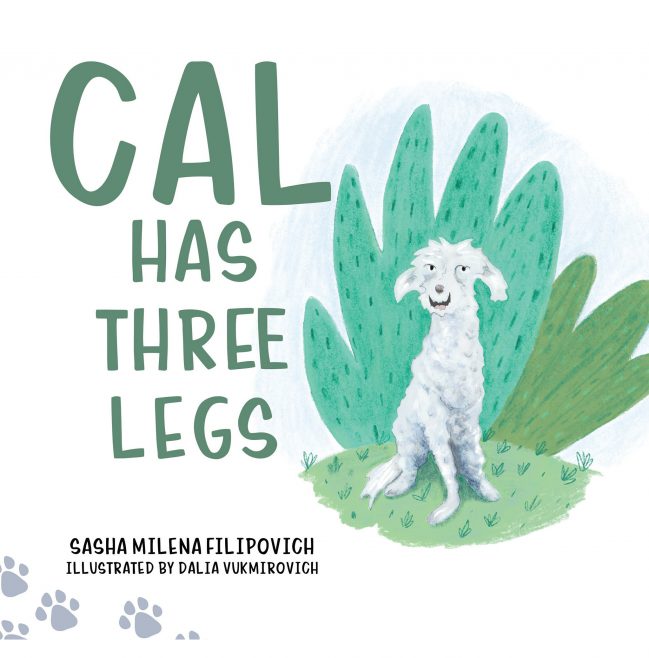
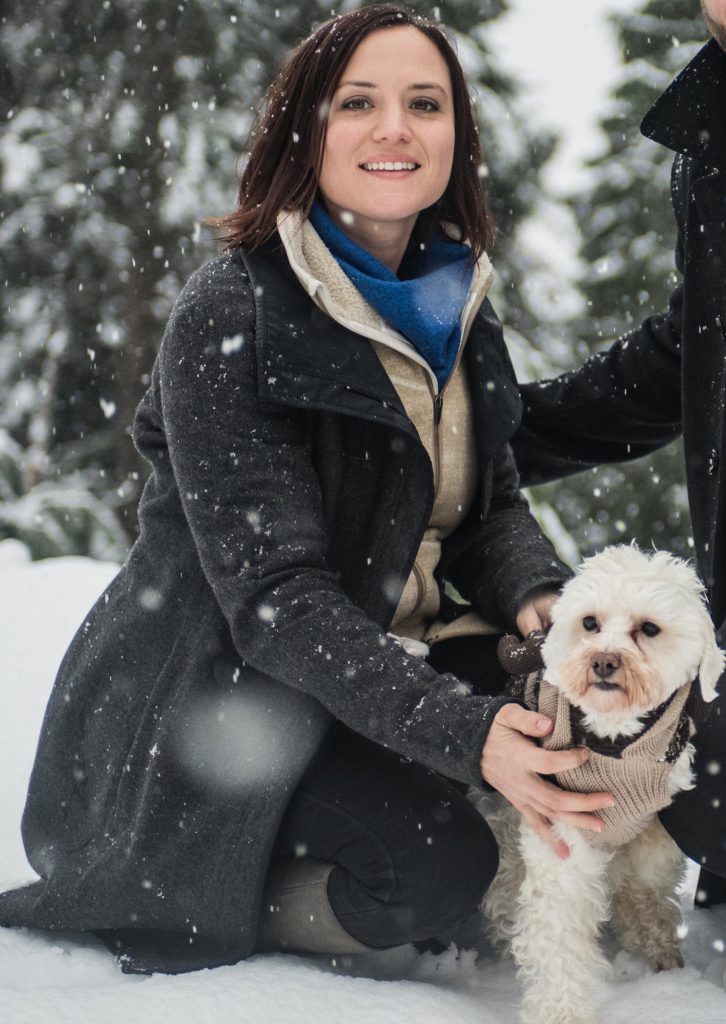
In this interview, Sasha Filipovich, author of Cal Has Three Legs, shares how her real-life rescue dog became the inspiration behind her first picture book. What began as simple, curious questions from children grew into a story about humor, self-acceptance, and approaching differences with openness.
“Tell the story you want to tell, and hold onto your vision.”
Sasha Milena Filipovich
Sasha talks about how her background in journalism, dance, and film influenced her storytelling, and how working closely with illustrator Dalia Vukmirovich helped shape the book’s visual and emotional tone. She also reflects on the patience and persistence required to bring a picture book to life.
She discusses what it meant to receive a Bronze Moonbeam Award and her experience publishing with Tellwell, and offers practical advice for authors creating their first children’s book.
The Award-Winning Memoirist of Being Broken, Honored by the New York Book Festival, New York Big Book Awards, BookFest, and the Nonfiction Writers Association for His Unflinching Exploration of Trauma, Addiction, and Recovery
…people suffering from NPD are victims as well. It’s not their fault that they turned out this way, but they are responsible for their actions. Once we can see them with this understanding, we can be more compassionate towards them, while still setting boundaries about what we will and will not tolerate.
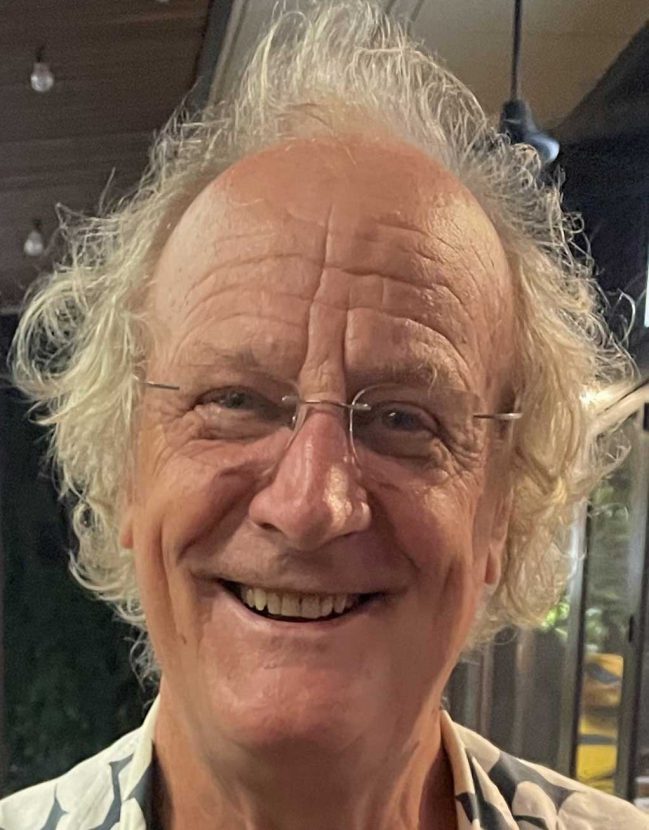
Geoffrey R. Jonas
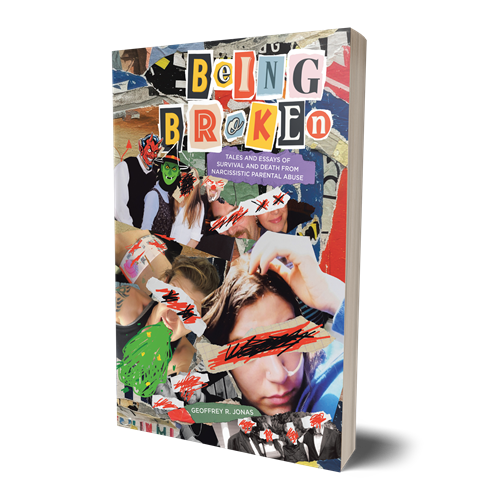
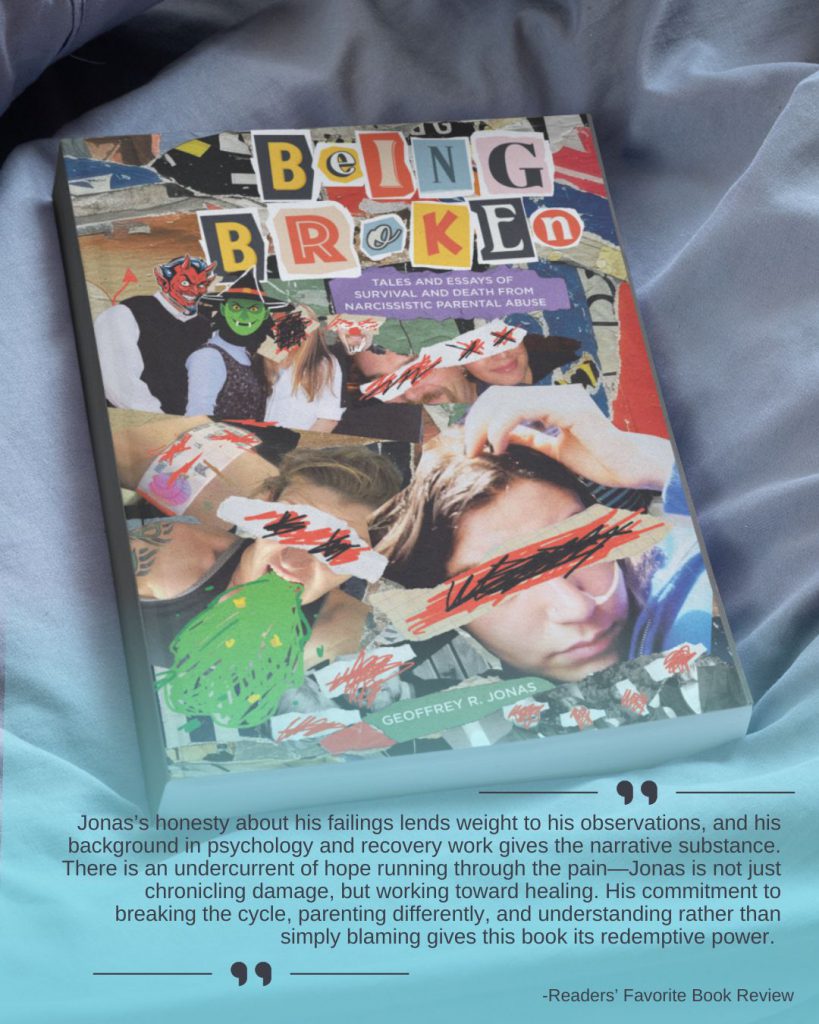
Geoffrey R. Jonas is our Tellwell Author of the Month, a new voice in nonfiction whose debut memoir has already made waves with readers and critics. His book, Being Broken, has earned numerous five-star reviews for its raw honesty, emotional depth, and compassionate exploration of trauma, addiction, and recovery. Since publication, Geoffrey has received an Honourable Mention at the New York Book Festival, was named a Distinguished Favourite at the New York Big Book Awards, placed third at the Nonfiction Writers Association Awards, and captured three second-place wins at BookFest across Health & Wellness, Psychology, and Mental Health categories. In this interview, Jonas reflects on the deeply personal journey behind Being Broken, the process of uncovering generational trauma, and the hard-won wisdom that has resonated so strongly with readers.
What inspired you to finally sit down and write Being Broken?Was there a specific moment when you realized this story needed to be told?
Simply put, the death of my sister. After her death, I had to understand how such a thing could happen. I had already been studying Substance Use Disorder (SUD) and trauma for many years; however, this was the first time I started looking directly into my family. The writing began as essays, discussing the abuse and trauma and how it relates to SUD. Once I started connecting the dots between trauma and SUD, I wanted to incorporate real-life examples of our experiences to better communicate that relation.
The book blends memoir with psychological insight.How did your background in recovery work and psychology shape the way you approached these deeply personal events?
I will start by clarifying that I am not a clinical psychologist. I hold no degrees, and I only took 2 years of psychology at university. While I am a certified facilitator for the SMART Recovery® program, I do not hold any further certifications in the recovery industry. I am a person of science and evidence though, so I dove headfirst into the studies, articles, and books related to these topics. I spent the equivalent, in years, of someone pursuing graduate studies, or even further, on both SUD and NPD. We also, however, need to understand the difference between knowledge and experience. You can study Narcissistic Personality Disorder (NPD) for years, know the trauma it can cause on victims, and be able to diagnose it in those suffering from it; however, unless you actually experience what it is like to be subjected to this kind of abuse, it is only that—knowledge. You can know fire is hot, but you do not truly understand it until you’ve been burned by it. It is the same with trauma and abuse. You can know all about it, read about it, study it, diagnose it; but, if you’ve lived through it, you now have the experience. My therapist called it ‘trauma wisdom’. To both know it and having experienced it give you this wisdom that many can’t comprehend. This allowed me to write about it from both the inside and the outside.
Readers describe the book as raw, unflinching, and honest. How did you balance telling painful truths with maintaining compassion for your family members?
The chapter “Fault vs. Responsibility and Blame” in my book covers this. It is very important to understand that many people suffering from NPD, or many other disorders, are victims themselves. The disorder is a behavioural adaptation based on their own traumas and abuse they experienced, typically as children. Excavating my parents’ history allowed me to see them as the abused children they were, and to forgive them for what is not their fault. However, I still hold them fully responsible for their behaviour towards us. Treating someone abusively is always a choice. Too often, people do not take responsibility for their hurtful actions towards others, blaming their disorders for their behaviour. There are so many people out there who have suffered trauma and abuse who do not continue the cycle of abuse, who choose to be better. And if they cannot take responsibility, apologize, and alter their behaviour so they do not repeat that harmful behaviour, there is no need to forgive to move forward. This is what is happening with my mother. I am no contact with her; she refuses to take responsibility for her part in the abuse of me and my sister. I’ve moved on without the need for forgiveness, but I still feel compassion for what she went through as a child.
Narcissistic Personality Disorder plays a major role in your book.What misconceptions about NPD do you hope this book helps clarify?
I’ve been following a lot of NPD survivor groups, so I am aware of many misconceptions out there about people with this disorder. The big one that I see often is that people with NPD are just evil, don’t feel emotions, and are unredeemable. While there are some sociopathic types of NPD, such as Machiavellian and severe malignant NPD, where the abuse can be terrible, there are also milder forms of NPD that can be subtle and non-violent. This doesn’t negate the damage emotional and psychological abuse can impart on victims of milder forms of NPD, however. As mentioned in my previous response, most, if not all, people suffering from NPD are victims as well. It’s not their fault that they turned out this way, but they are responsible for their actions. Once we can see them with this understanding, we can be more compassionate towards them, while still setting boundaries about what we will and will not tolerate. They are people who do feel emotions, they just do not have the tools to manage those emotions and the subsequent negative behaviour because they didn’t have the proper support to develop positive responses to those emotions as children.
You uncovered many family secrets through letters, notes, and digital correspondence.Was there anything you discovered in that process that fundamentally changed your understanding of your past?
Like stepping into the sun after a life in the dark. When you live your whole life with familial abuse, without any kind of comparison to how normal families behave, you do not understand that it is abuse; this kind of family life is perceived as how families behave. Seeing the videos, reading the texts and letters, and learning my parents’ family history gave me an understanding of who they were as abused little children and how easy it is to repeat generational cycles of abuse. It was like a spotlight turned on, and everything was exposed to the light. Memories, suppressed or denied, opened like doors in an endless hallway. Everything about my childhood was relived through newly tinted glasses, where I could see that how we were treated as children was not our fault, nor was it normal. This allowed me to forgive myself for my part in the destruction of my family and improve myself as a person, especially as a father.
What were your biggest takeaways about the publishing process when working with Tellwell? Were there any unexpected lessons learned making your first book?
That you really need to do your research to find the right company to assist you with publishing your book, especially if you’re self-publishing. There are so many scams and misleading platforms out there trying to get your money for subpar production of your book. Tellwell was easy and straightforward with the process, not to mention quick, at a very reasonable cost. However, I think the biggest lesson was about the marketing aspect of the book. Submitting for reviews and awards, promotional materials and social media, and organizing interviews such as this one, can all take a lot of time and can add up in cost very quickly. If you do not consider, and budget for, the marketing aspect of publishing, you’re not going to sell many copies.
Exploring the mystery of Mozart’s music, the genius of Marie Anne, and the research behind a groundbreaking new documentary.
Tellwell Publishing is pleased to highlight Dr. Martin W. B. Jarvis, a scholar who has spent much of his career challenging long-held assumptions about the great composers. His newest novel builds on years of forensic handwriting research and offers a fresh look at Mozart’s life, his music, and the mystery surrounding his final days. The book was also selected for the Publishers Newswire Books to Bookmark list for its unique approach and lively investigation into music history.
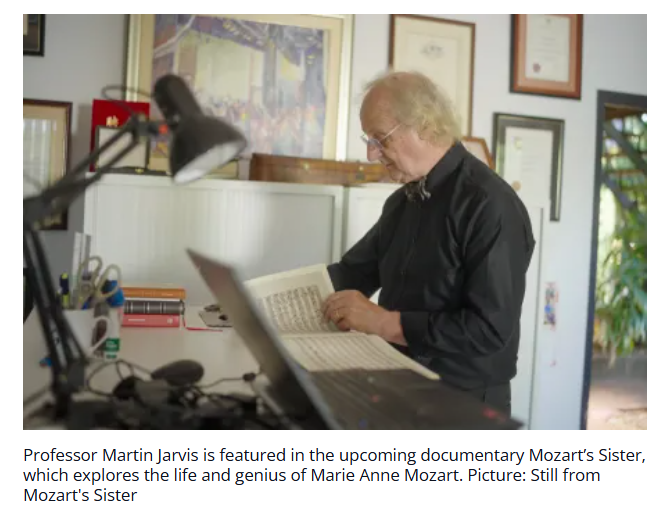
Dr. Jarvis’s research is now reaching an even wider audience through the upcoming Sky Originals documentary Mozart’s Sister. The film explores the life and talent of Marie Anne Mozart, who performed with her brother as a child and, as Jarvis argues, may have been the creative voice behind several works traditionally credited to Wolfgang. His involvement in the documentary grew out of work that began when he was only fourteen and studying Mozart’s Violin Concerto No. 2. Even then he sensed something unusual in the score, a curiosity that led him to decades of study and the discovery of distinct handwriting traits on key manuscripts.
In the documentary, Jarvis explains how signatures like “W. A. Mozart” differ from those written as “Amadeo Wolfgango Mozart,” and how this evidence points to Marie Anne composing under a different name. The film also highlights the broader history of women in composition, a subject Jarvis has explored before in his research on Anna Magdalena Bach. That earlier work became the book Written by Mrs Bach and later a BBC documentary, which brought even more attention to the hidden role of female composers.
Inside the mind of the educator behind 50 nature-inspired, kid-tested art projects and an award-winning book!
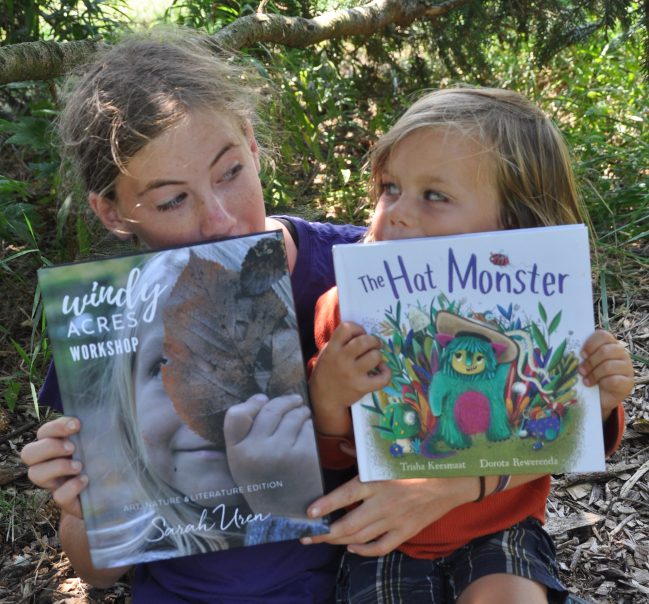
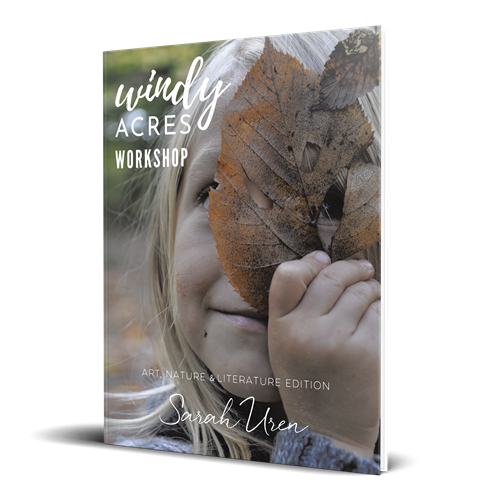
Sarah Uren has made an extraordinary entrance into the world of children’s literature and education. Her first book, Windy Acres Workshop, has already earned a Bronze Award in the Activity Book (Arts & Crafts) category, one of the most competitive and respected sectors in children’s publishing. It’s a remarkable achievement for any creator, let alone a first-time author.
From pumpkin patches to polar bears, Crystal Beach shares how her books help children learn, imagine, and belong.
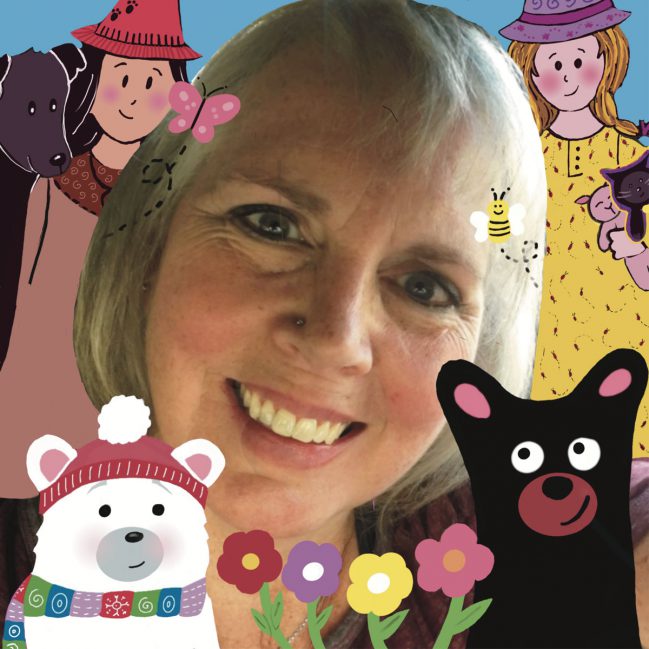
Author and illustrator Crystal Beach has built a body of work that celebrates curiosity, inclusion, and early learning. Her newest book, One Little Witch, moves from the Arctic setting of her earlier titles into a magical pumpkin patch inspired by her own backyard. In this interview, Crystal talks about what drives her storytelling, how her background shapes her creative process, and what she’s learned along the way.
“My passion for early learning comes from wanting to make stories that are both fun and meaningful for young readers.”
Joe Lyons-Rising on leading with empathy, turning personal loss into purpose, and guiding others toward hope.
Even in the darkest times, hope and love is what pulls me out and helps me look ahead to the next sunrise.
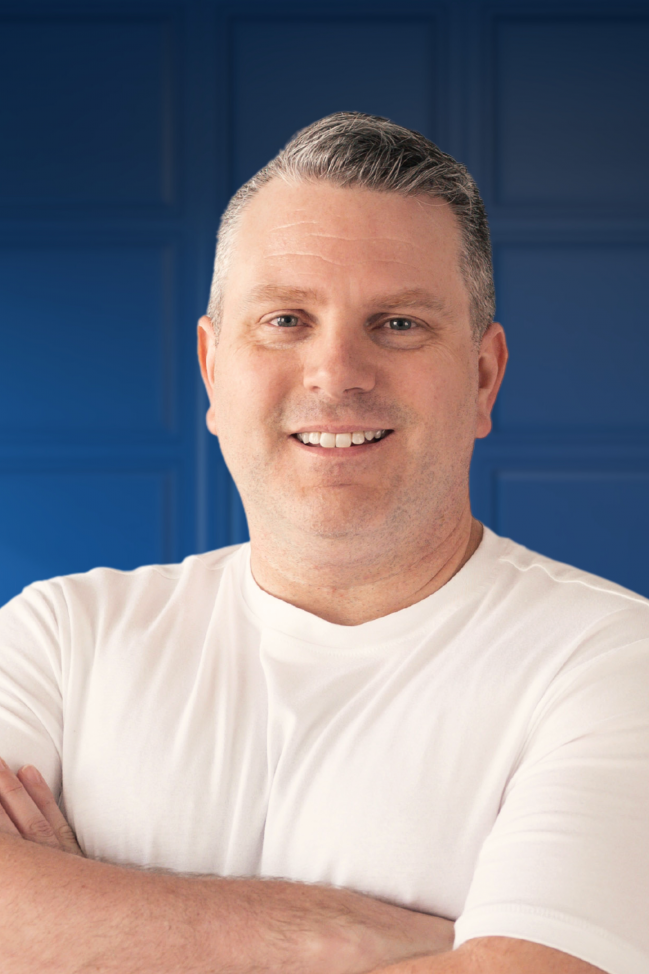
Joe Lyons-Rising
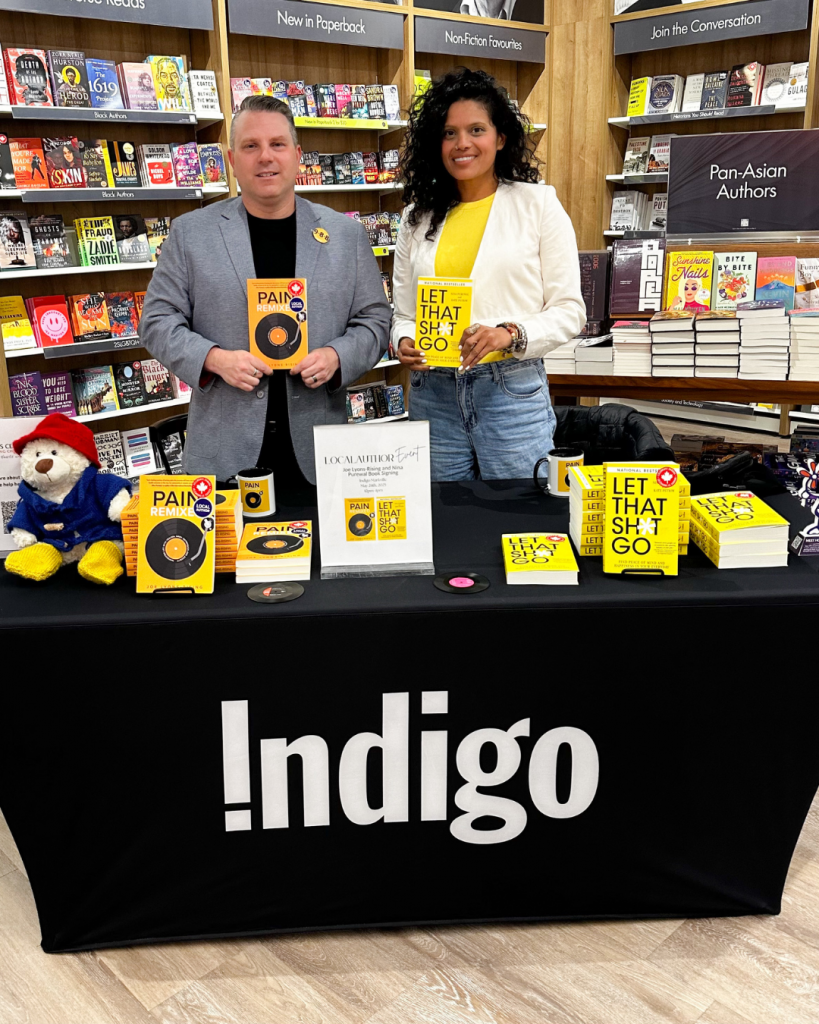
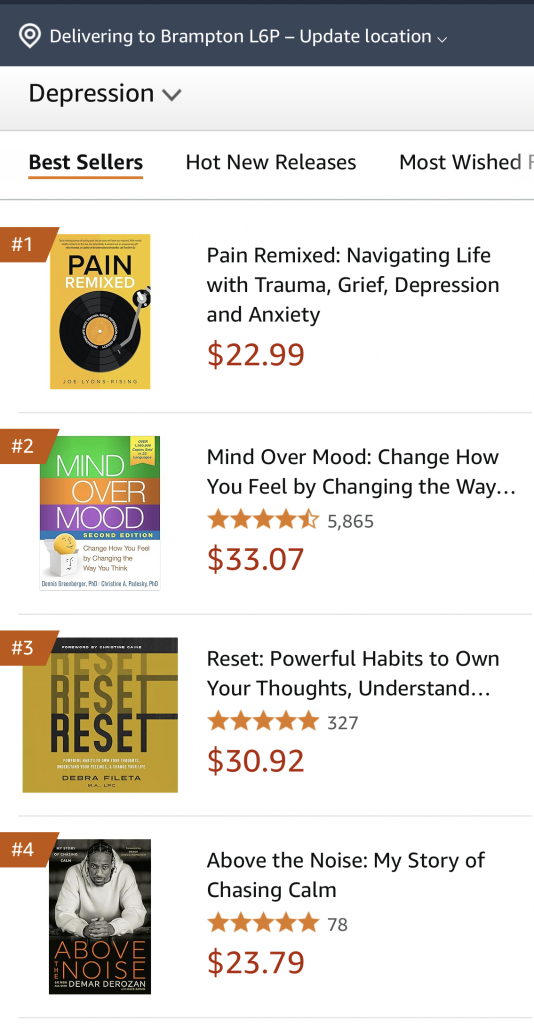
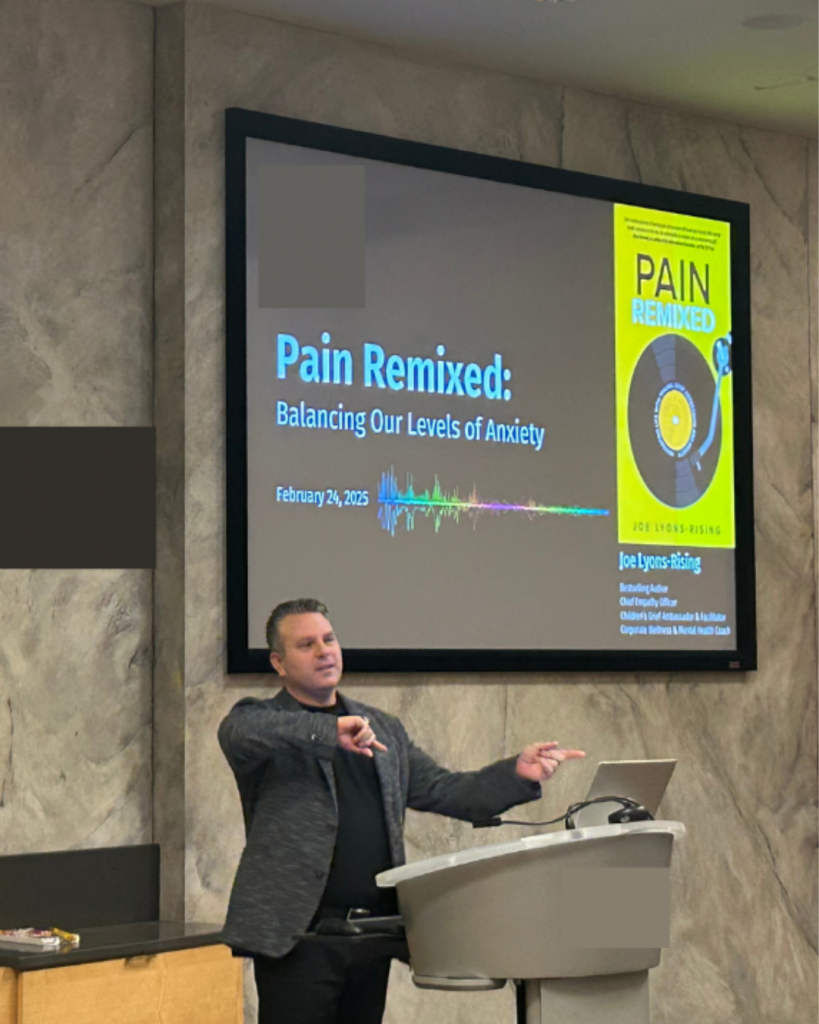
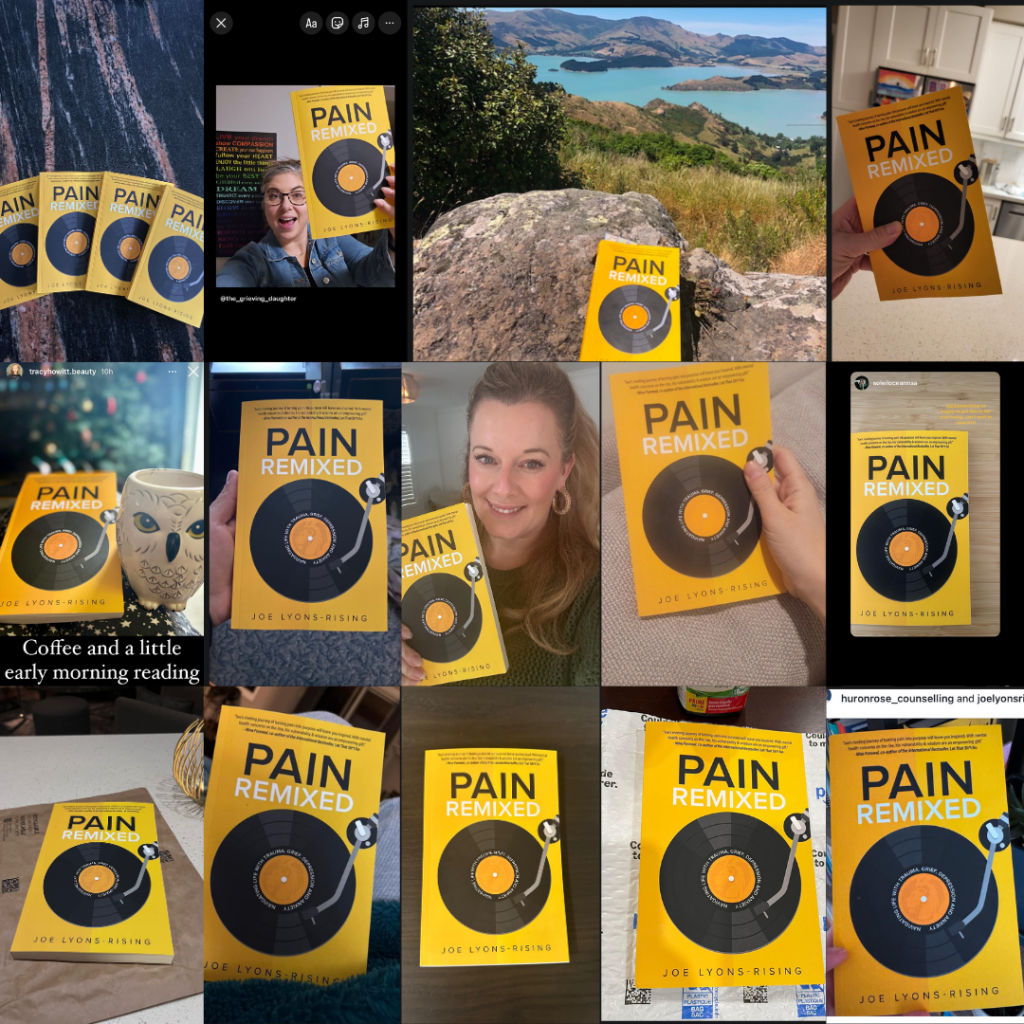
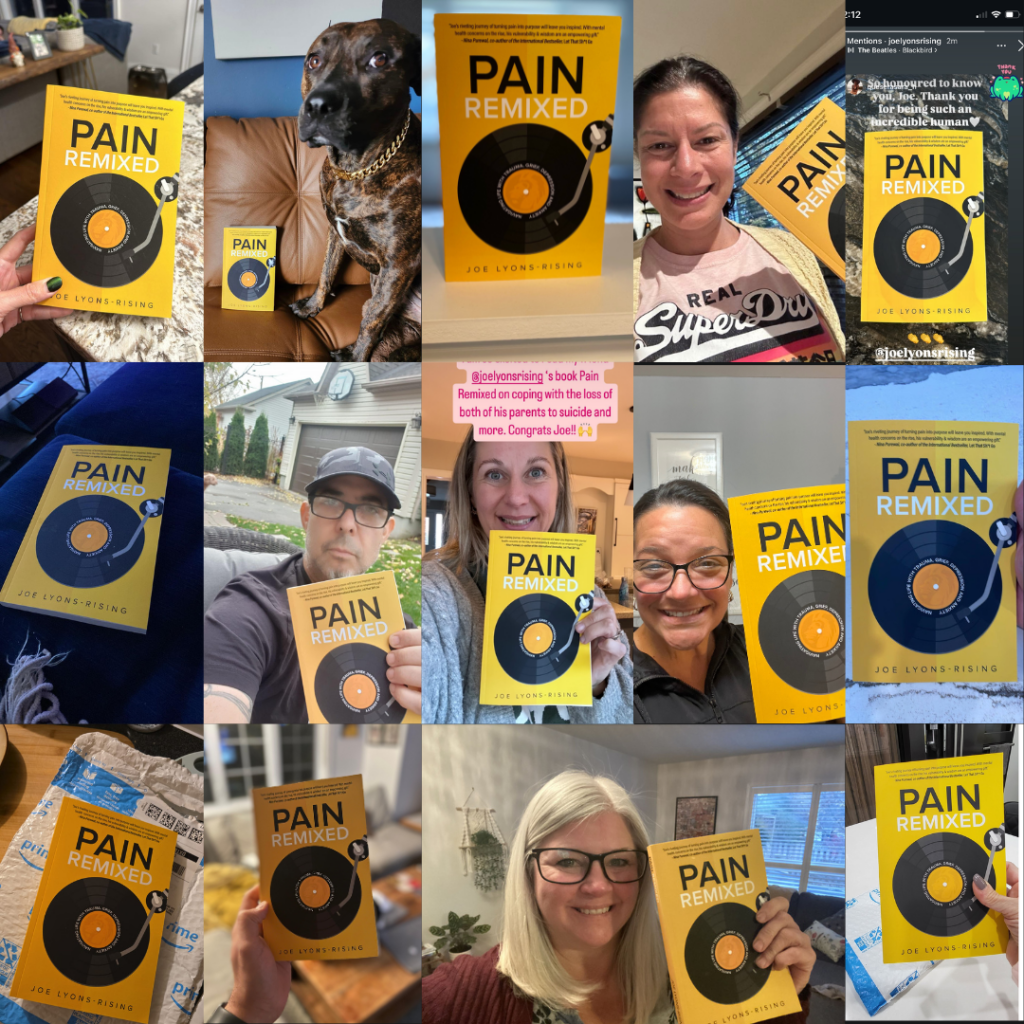
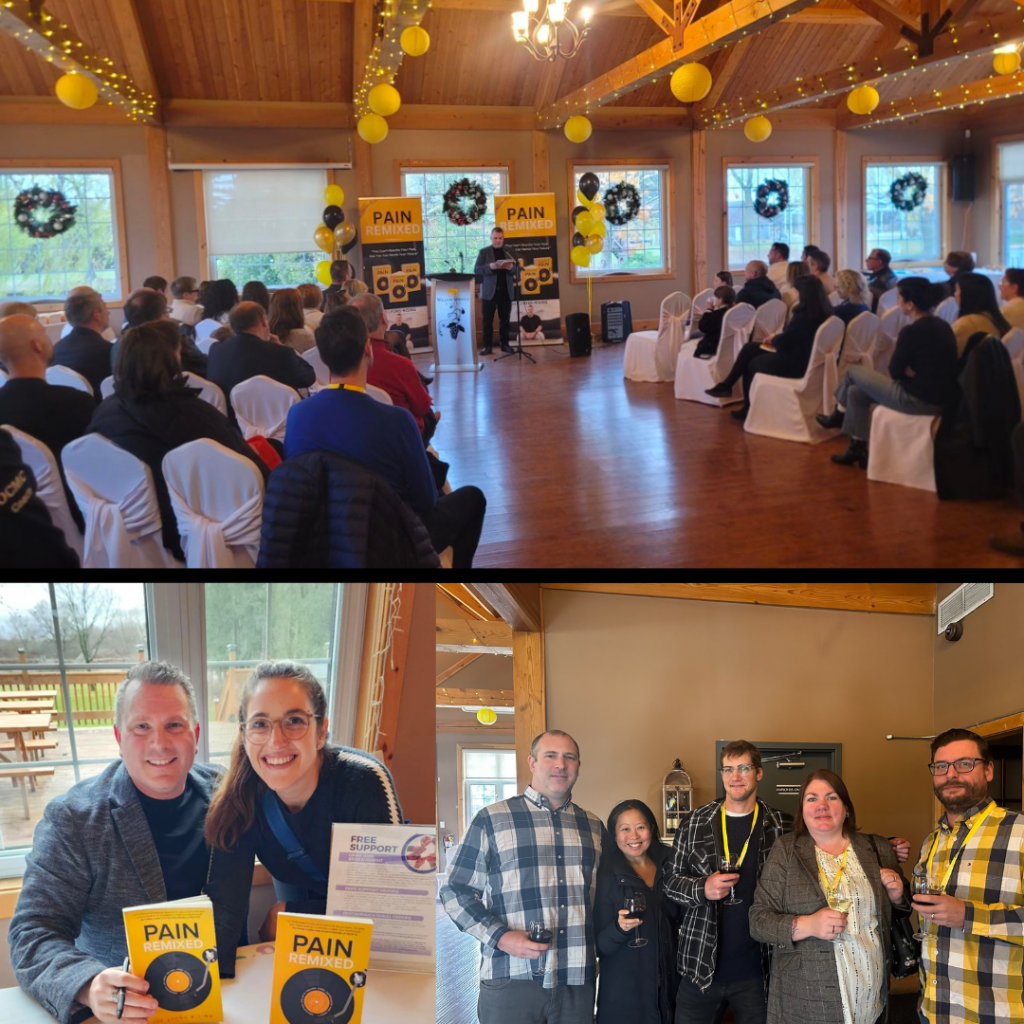
Grief, trauma, and mental health struggles are experiences that can feel isolating, yet these experiences are universal. In his #1 book Pain Remixed: Navigating Life with Trauma, Grief, Depression and Anxiety, author, DJ, and public speaker Joe Lyons-Rising opens up about losing both of his parents to suicide as a child and the impact that loss had on his life. Through his story he explores not only the weight of trauma, depression, and anxiety, but also the resilience, empathy, and hope that carried him forward. Joe has been featured in Barrie Today, CBC, iHeart Radio, and numerous other media outlets, where he continues to raise awareness and inspire others through his message. In this conversation he shares what inspired him to write his book, the lessons he’s learned along the way, and why he believes hope and love are the most powerful tools we have for healing.
Can you tell us what Pain Remixed is about, and why you decided to share your story publicly?
Pain Remixed is my story of growing up after losing both of my parents to suicide in the 1980s, and how that experience followed me through childhood, my teenage years, and adulthood. The book is about living with trauma, grief, depression, and anxiety, but it is also about rediscovering hope and love. I decided to share my story publicly because I know how isolating mental health struggles can be. If even one person reads the book and feels less alone, then it has done its job.
While you were working with Tellwell on producing the book, what was the biggest lesson you learned during the process? Do you have advice for any prospective authors out there?
The biggest lesson I learned was to always plan for extra time. Editing involves multiple rounds, and ordering bulk books in Canada can take longer than expected. I also realized how important it is to be involved in the design, marketing, and PR. Your own creativity, contacts, and hard work can make the collaboration with Tellwell even more successful.
My advice to new authors is to enjoy the process, especially the writing. Try not to be too critical of yourself in the early stages. Let your creativity flow. You will have more than enough time to edit and polish, but those first raw bursts of writing are what give your book its authenticity.
In the book, you write about losing both of your biological parents to suicide during your childhood. How did that shape your outlook on life and mental health?
Losing both my parents to suicide as a kid taught me not to take people, situations, or opportunities for granted. Life can change in an instant, so I don’t wait when it comes to chasing my dreams. It also gave me a deep sense of empathy for others and what they are going through. When I run mental health workshops or volunteer, I am there as an ally who walks alongside people, not as someone who speaks at them. That shared perspective is what makes the support feel real.
How did your experiences with depression and anxiety influence the strategies you share in the book?
The most important strategy for me has been holding on to hope for a future filled with love and happiness. It is not always simple, and life can make it feel far away, but hope has been the guiding light that keeps me moving forward. Even in the darkest times, hope and love is what pulls me out and helps me look ahead to the next sunrise.
In addition to being an author, DJ, and public speaker, you also volunteer as a grief ambassador and facilitator. Can you share with our readers what that role entails?
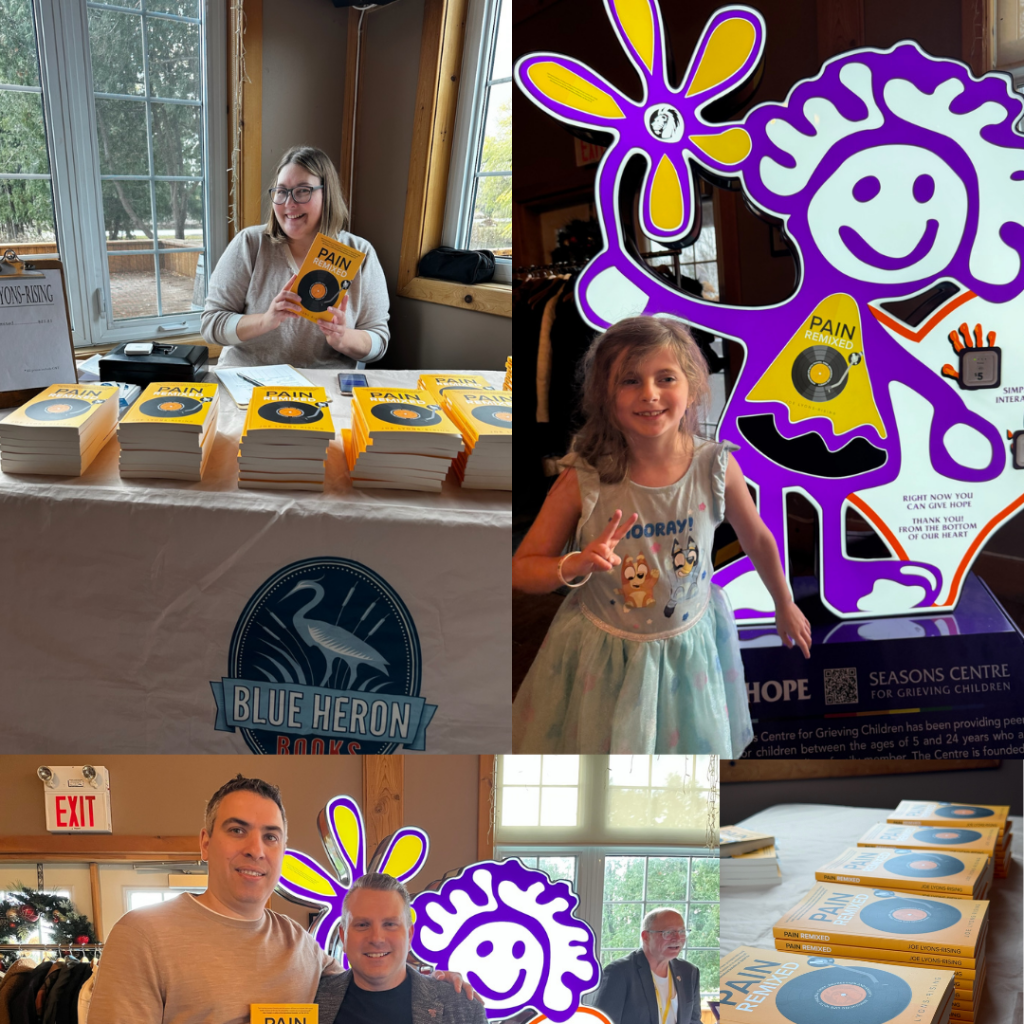
As a grief ambassador, I raise awareness for Seasons Centre for Grieving Children by sharing my story with corporate clients, in the media, and in the community. Seasons wasn’t around when I was a kid, but it would have made a huge difference in my life. Now, I do my part to make sure families know the support is there for them.
As a grief facilitator, I volunteer in Barrie every other week at Seasons Centre’s peer-to-peer program. My role is to be a “buddy” to the kids who attend. We work through grief together in ways that feel natural to them, whether that is art, play, or group sharing. The program is guided by a social worker, and my part is to support, listen, and be present for the kids.
What do you hope readers will take away from Pain Remixed?
I hope readers take away that we can never give up hope. Even when life feels dark, there is always the chance for brighter days. Suicide takes away the possibility of experiencing that beauty and those moments of joy that are still to come. We are not alone in our struggles. Most people carry something heavy, and when we open up, we can often find support that makes the weight feel lighter.
Is there anything else you’d like to add?
Giving back through philanthropy or volunteer work are some one of the most profound gifts we can offer in this life. It changes lives for the people who receive support and for the people who step up to offer it. There is no purer form of love than helping others in need, and the feelings that come from that are truly priceless.
Exploring History and Science Fiction on the Oregon-California Trail
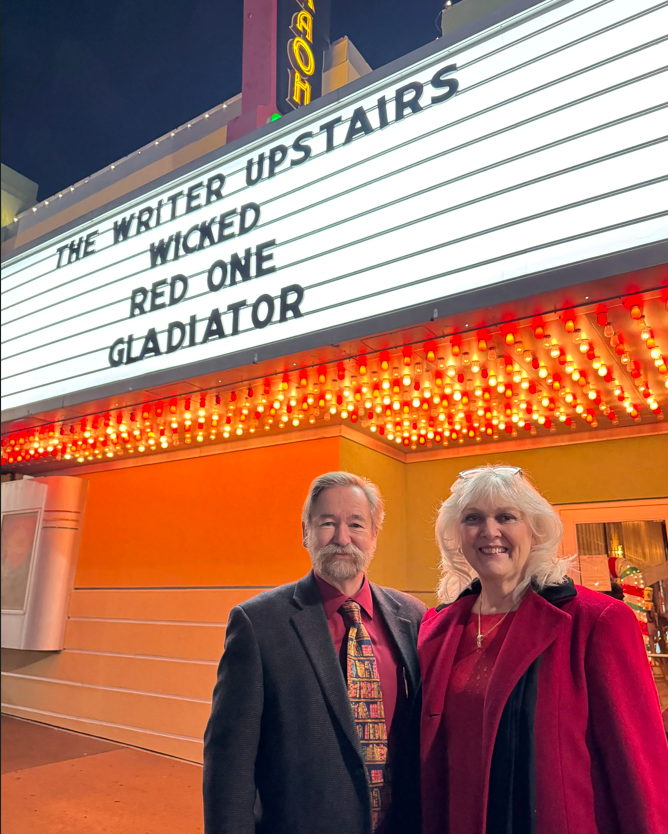
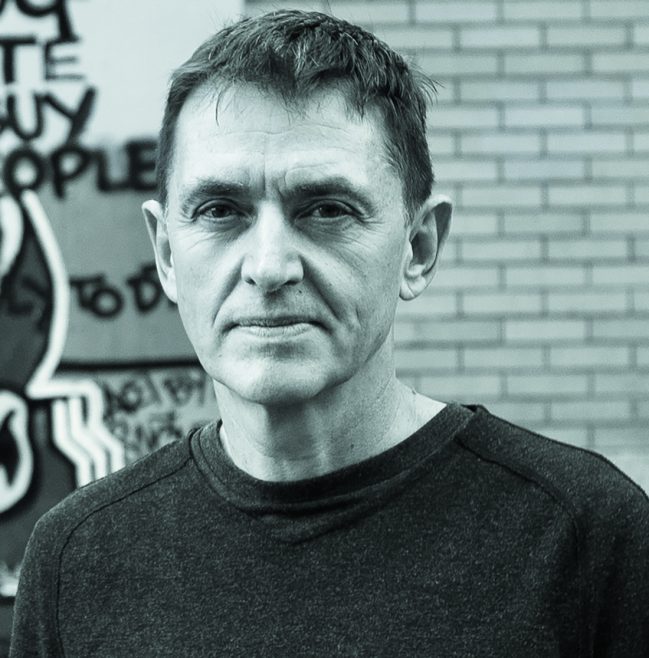
Matt and Kathy Mallinson at The Writer Upstairs short film première
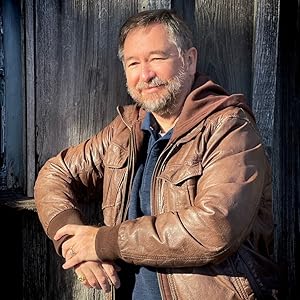
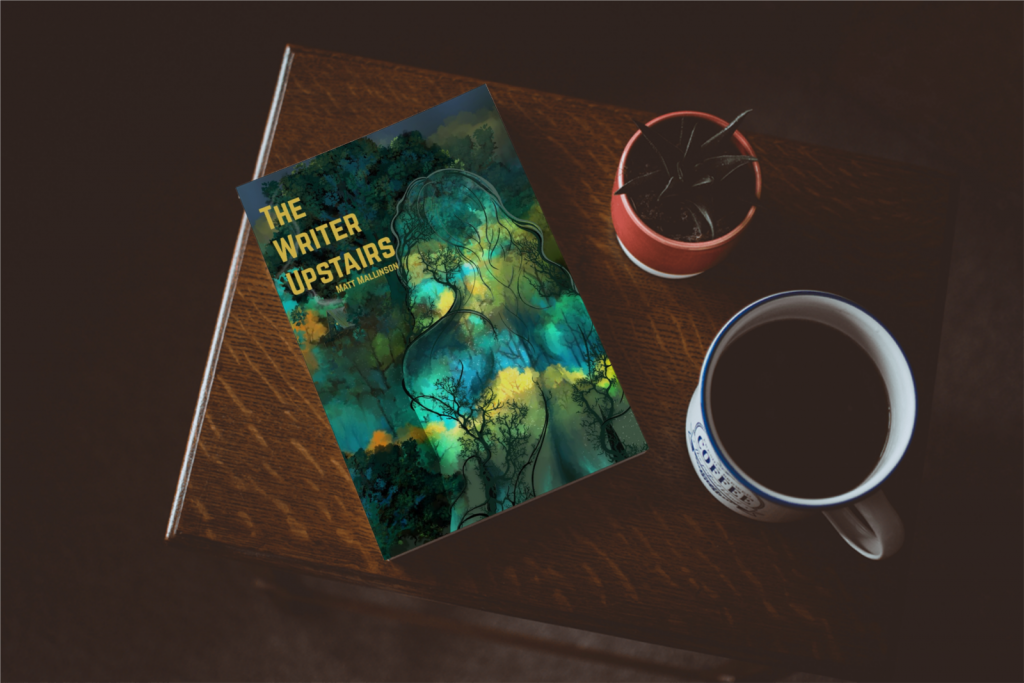
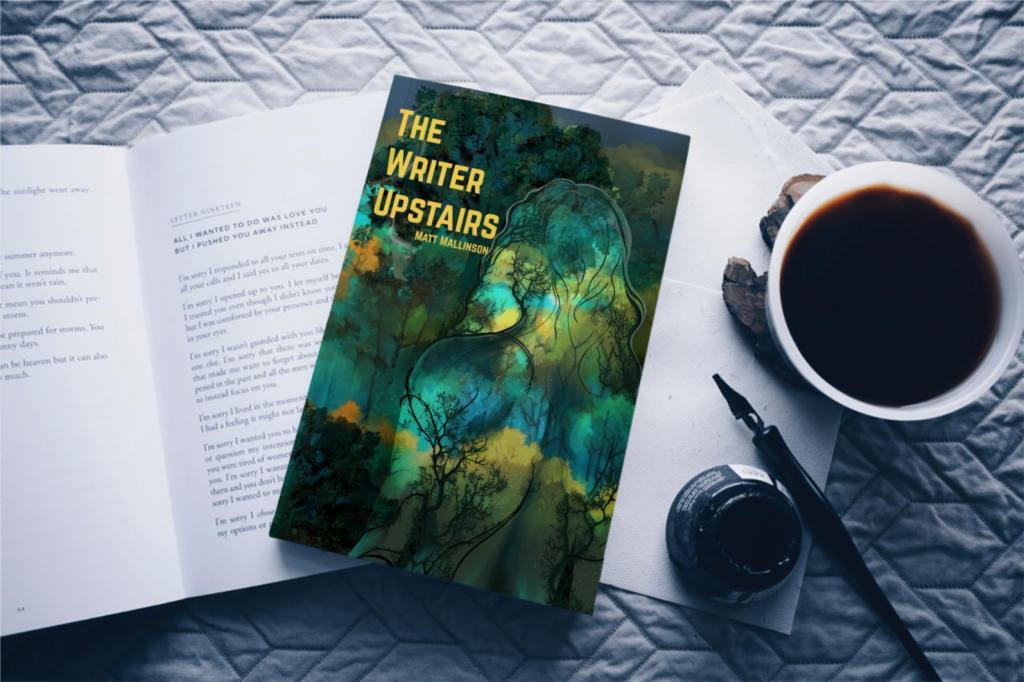
Matt Mallinson is an author, historian, and long-time member of the Oregon-California Trails Association, who also has a strong interest in the film industry. His work often draws on history, science, and the environment to create stories rooted in the American landscape. His latest novel is set on the Great Plains, where a chemist and a young woman uncover secrets of the past through a mysterious connection to the natural world. The book reflects Mallinson’s interest in history, the land, and the choices that shape our future. His debut novel The Writer Upstairs, is more than a book; it has been adapted into a short film that showcases the world of the book and some of the characters, as well as an audiobook.
We spoke with Matt about his inspiration, his ties to the pioneer trails, and the themes behind his writing.
Without the past, we would not have the present, and there would be no future.
Matt Mallinson
The Writer Upstairs trailer
What inspired you to combine science, history, and environmental themes in your latest novel?
Whether one is presenting a topic to a large convention audience, college or high school classroom, or just a small group of individuals, the speaker must know the intended audience to keep the subject engaging. The same for novels: know your audience. No matter one’s age, they can find intense interest in at least one of the three: science, history or environmental themes. All subjects are relatable to the reader.
Can you tell us about the reclusive chemist and the mysterious woman? What drew you to these characters?
Actually, the characters found me. No joke. Most good novels need a love interest, and these two, from their prior lives, seemed to have the need to bump into each other and connect. The two, and another major person in the novel, spent their well-structured and calculated early educational years being taught together. Eventually, their career paths separated the chemist and our mysterious woman, eventually coming together in the middle of the chemist’s family mountain.
How did your experience with the Oregon-California Trails Association influence the historical aspects of the book?
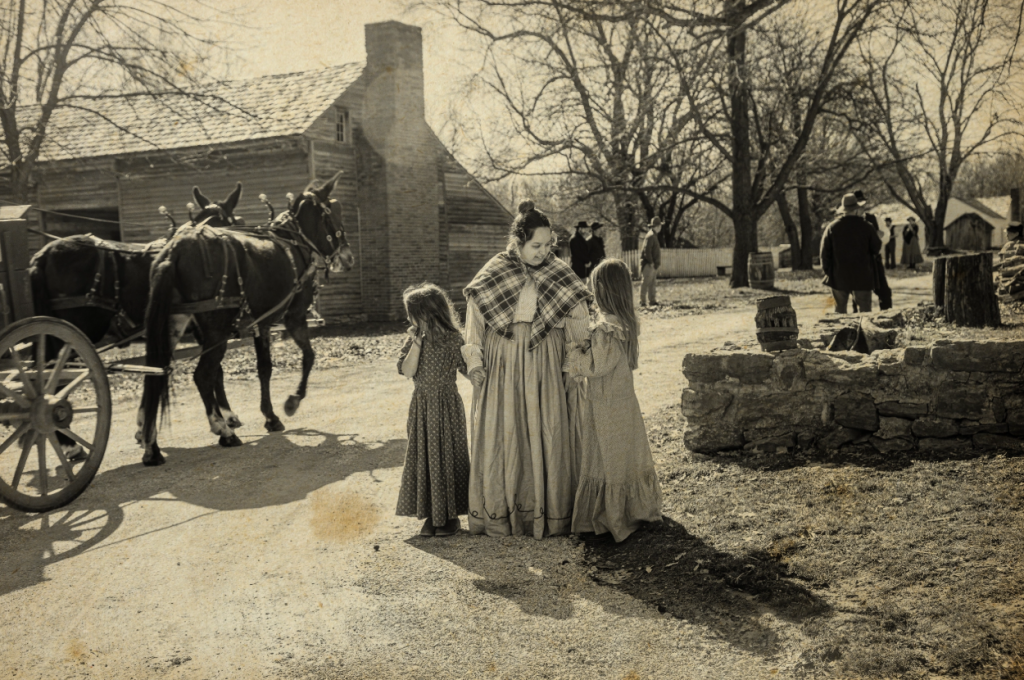
The Mallinson family has a deep and rich history in this area. I have grown up with family stories about the Civil War, watching the battles from an adjacent hill. Farming during good and bad years. A Native American that was always supplied a place to stay on his travels. Molly, Rex, and a variety of work animals. Gunplay, fist fights, and everything else that happened during frontier travels. These learnings gave me an appreciation of history and that we should make every possible effort to learn, treasure and respect the past. Without the past we would not have the present, and there would be no future.
Author Matt Mallinson as the Banker in the short film based on his book.
Your book trailer is very thorough and well produced, and you act in it as well. Why did you think it was important to put so much effort into a promotional video?
I feel very strongly about the messages that we need to learn from nature, past cultures, current issues of the world, and ways to not only solve problems but to prevent new ones. We should meld the knowledge of the past with present knowledge to try to create a better future. I feel that the videos will increase people’s awareness of this present novel and the series soon to follow. I hope the more people that read these, the better place the world can become. As far as acting? Who better to play the part than the one who created the character!
What do you hope readers take away from the novel, both in terms of story and larger themes about the planet and human connection?
For a story to be of interest, it should be relatable to its readers. The Writer Upstairs is very relatable to common issues we all face. Every animal species has an expiration date. I hope these topics will stimulate enough people to take some actions to help postpone the human expiration. Working together to solve problems instead of pointing fingers or following the almighty dollar should allow us to prosper into the next millennium. We face world hunger, energy shortages, and overpopulation, just to name a few. We should search for the best solutions, not the ones that make the most financial sense to only a few.
How has living on the oldest road west of the Mississippi influenced your perspective as a historical fiction writer?
I grew up on an 1850s family farm along the trails. My children are the sixth generation in this area. I own the first natural springs that the westward travelers stopped at after they disembarked the steamships on their way to Independence. If I am quiet at night, I think I can hear the voices of the half million people that walked down this road. My mother was considered the historian for the county. I remember her looking at the large trees and saying, “If only trees could talk.” If I could be like The Writer Upstairs, I could tell more stories. She knows how to listen.
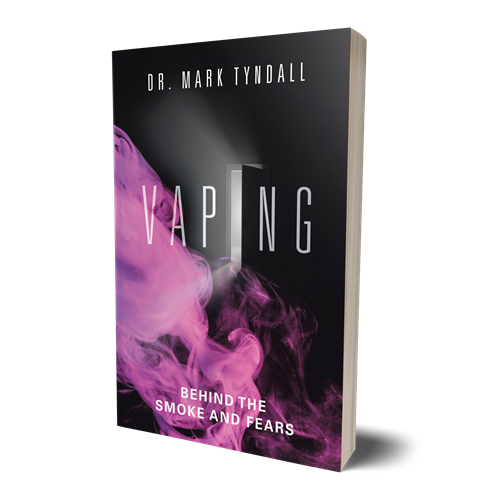
A leading voice in harm reduction challenges the fear-driven narrative around vaping and explains why science, not stigma, should guide public health.
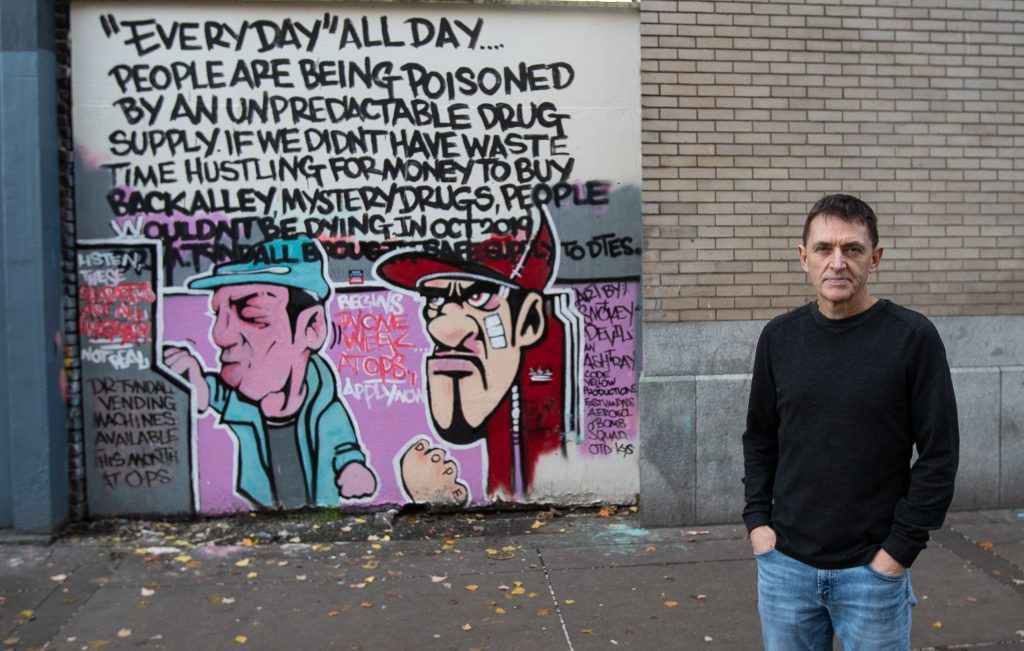
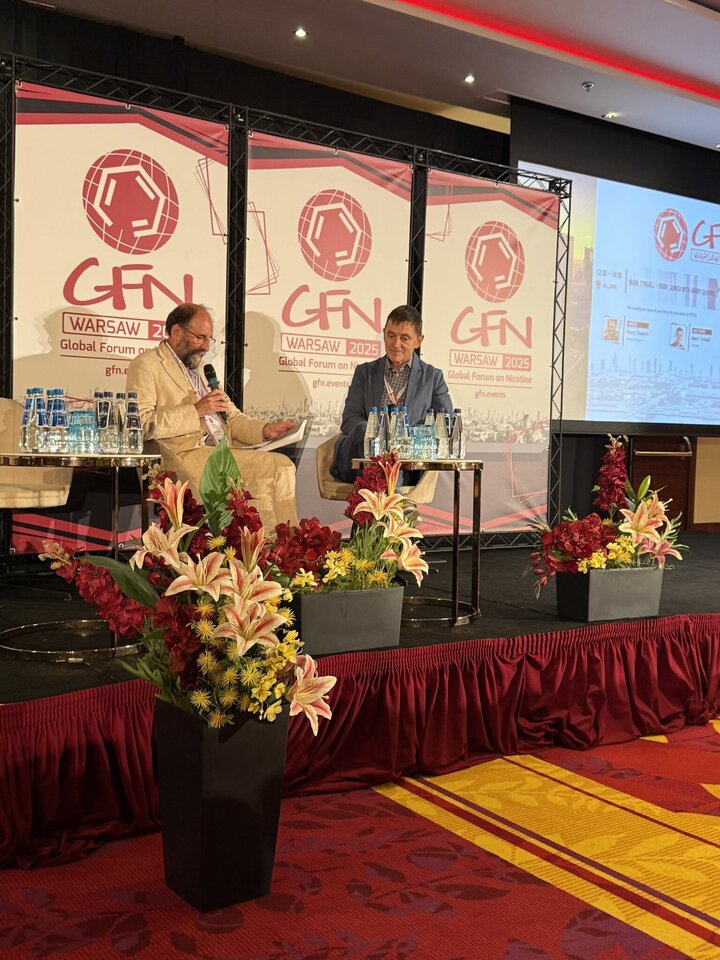
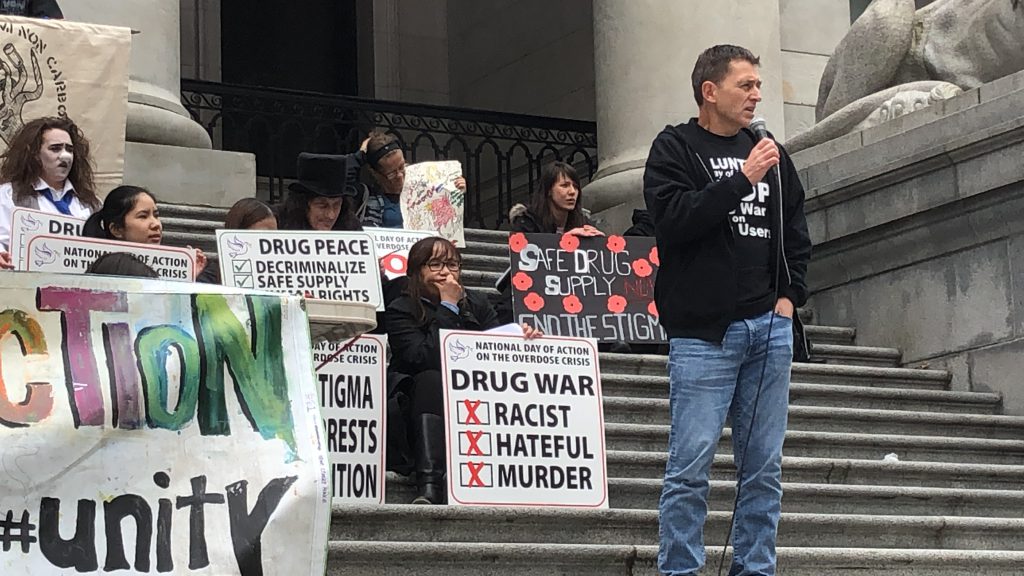
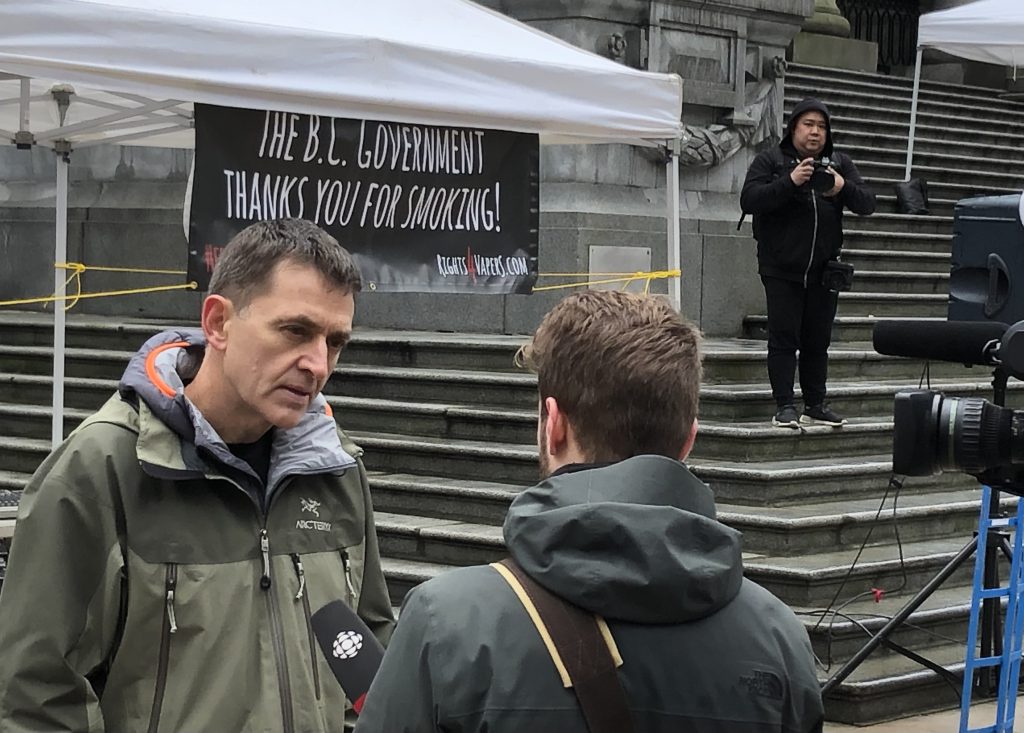
Dr. Mark Tyndall has spent decades on the front lines of public health, supporting marginalized communities and making advancements in harm reduction. In this candid interview he discusses his latest book, Vaping: Behind the Smoke and Fears, which makes the case for vaping as a misunderstood but potentially life-saving alternative to smoking. Drawing from his extensive medical and research background, Tyndall unpacks the myths, media narratives, and policy failures that continue to cloud public understanding, and explains why embracing safer nicotine options could be one of the most important public health shifts of our time.
Most campaigns against vaping are just not truthful or based on science. They are based on fear and stigma.
Dr. Mark Tyndall
Your career has spanned infectious diseases, public health, and harm reduction. What first drew you to focus on tobacco harm reduction and the potential of vaping?
My medical career has really revolved around HIV prevention and care. When I started medical school in 1982, HIV was just emerging as a curious disease among gay men. No one anticipated a global pandemic that would claim over 40 million lives. At the beginning, there was no treatment for HIV and prevention was the only option. Even today, when effective treatment exists, preventing HIV transmission is a global priority. I worked with groups that were particularly vulnerable to HIV transmission: heterosexual couples in sub-Saharan Africa, gay men, women who sold sex, and people who injected drugs. It was clear that sex and drugs could not be stopped and the only way forward was to provide options that would reduce but not eliminate the risk: education, condoms, clean needles, for example. This is harm reduction. So with that background it was pretty clear to me that vaping was a very effective harm-reduction intervention with global implications. Taking the world’s most deadly activity—smoking cigarettes—and offering a much safer alternative: vaping nicotine.
In Vaping: Behind the Smoke and Fears, you describe vaping as one of the most significant public health breakthroughs of our time. What do you believe are the biggest misconceptions about vaping today?
I have taken a deep dive into the subject over the past few years and it is hard to list the biggest misconceptions because there are so many. Sometimes I think there must be a massive conspiracy to protect cigarettes. It is irrefutable that cigarettes are massively more harmful than vaping nicotine. There is no reasonable argument to the contrary. However, most people believe that vaping is just as harmful as cigarettes and public health authorities have been reluctant (or negligent) to correct this misconception. So that would be the number-one misconception. The second is that there is a youth epidemic of vaping that is very harmful. While there has certainly been a lot of young people experimenting with vaping over the past 10 years or so, this peaked in North America around 2018 and has been falling since then. The proportion of young people who now vape daily or who would be considered to be dependent on nicotine is quite low and certainly less than the number of young people who would be smoking cigarettes. This should be seen as a public health win. In addition, there have been very few adverse health effects reported and not a single death from vaping nicotine. The third main misconception is that this is an attempt by Big Tobacco companies to addict a new generation to nicotine. This is far from the truth. Tobacco companies are quite happy selling cigarettes. Although they see a gradual decline in richer countries, the global market continues to produce massive profits and vaping is disruptive to their industry. They are quite happy to have government policies slow down the evolution of safer nicotine products.
You’ve argued that public health policies on vaping have been shaped more by fear and ideology than evidence. Why do you think so many health organizations and policymakers resist embracing vaping as a harm-reduction tool?
This blows my mind. It is entirely irrational. The tobacco control “industry” has been working on abstinence-based approaches to cigarette smoking for decades. They have supported the use of nicotine patches and more recently nicotine gums and sprays, with the goal of eliminating cigarettes. However when vaping came along, they didn’t know what to do. It looked a lot like smoking and it went against the abstinence messaging. They then turned their attention to nicotine addiction and started to vilify nicotine. Agencies that are into tobacco control now talk mainly about nicotine addiction as a reason for restricting vaping. They have also focused mainly on youth which is really a distraction from the main goal of eliminating combustible tobacco and saving the lives of people who currently smoke. They are so entrenched in their abstinence-based world they see no way out.
What role do you see misinformation campaigns and media narratives playing in shaping public perceptions of vaping, especially around youth use?
It is currently out of control. Most campaigns against vaping are just not truthful or based on science, they are based on fear and stigma. They are not particularly effective to dissuade youth from vaping but have created a lot of uncertainty in general. These youth campaigns are a big reason that adult smokers are reluctant to switch to a much safer product. They also create panic among parents who are at the forefront of demanding unreasonable restrictions on vaping products.
Looking ahead, what policy changes or public health initiatives would you most like to see implemented to advance the conversation around vaping and save lives?
I think that eventually a more rational approach will emerge, but unfortunately it is likely to take some time. Obviously, the availability of safer products should be made easier than cigarettes. So there should never be policies that make cigarettes more attractive than vaping. There should be places where vaping is allowed but not cigarettes. Taxes should be much lower on vaping products. Flavours should be widely available for vaping liquids. The promotion of vaping should include relative risk information comparing it with cigarettes. There should be national smoking cessation targets using vaping and safer nicotine products to reach those goals. A smoke-free society is what we are striving for. Not a nicotine-free society.
For readers who may be skeptical about vaping or unsure what to believe, what’s the single most important takeaway you hope they get from your book?
I am always confronted by people who are skeptical or unsure. As a physician I have no problem with patients asking questions about my decisions in their care. In fact I encourage it. I want people to feel confident that if I recommend a certain diagnostic test or order a certain medication, that I have done my homework and have experience dealing with similar illnesses. I don’t take this lightly. But my experience with vaping is very different. Although I am an expert in harm reduction and know a lot about the deadly impact of cigarettes and the relative safety of vaping nicotine, I am constantly faced with skepticism and push-back. I hope that the book can convince people that vaping and safer nicotine products present a major breakthrough for public health and can start to reverse a century of tobacco-induced devastation to human health. At an individual level I hope that this book can convince people who smoke that there are now far better options. They don’t have to die just because they use nicotine.
How one author weaves identity, horror, and humanity into gripping thrillers.
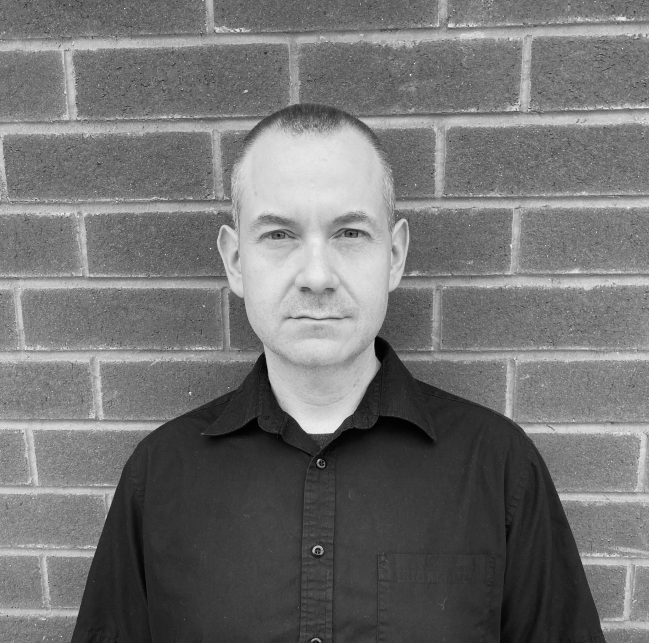
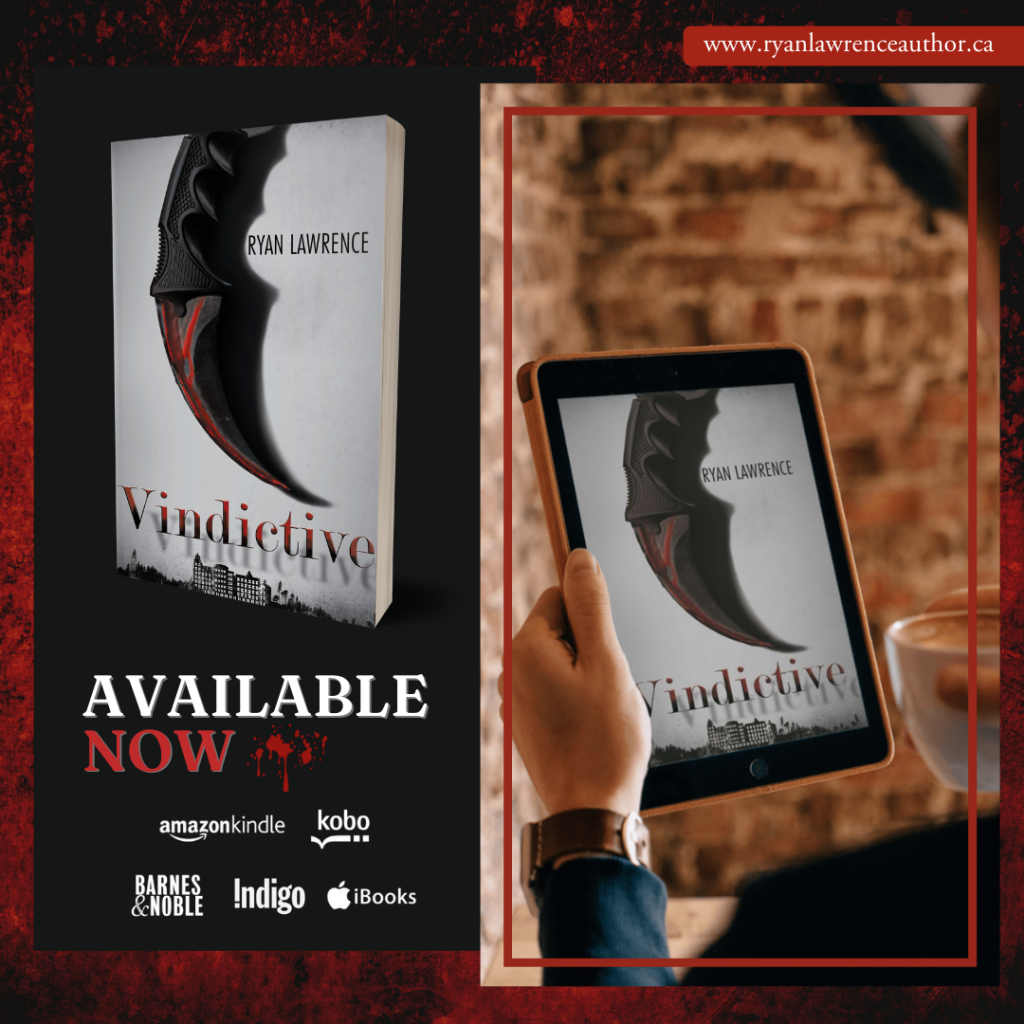
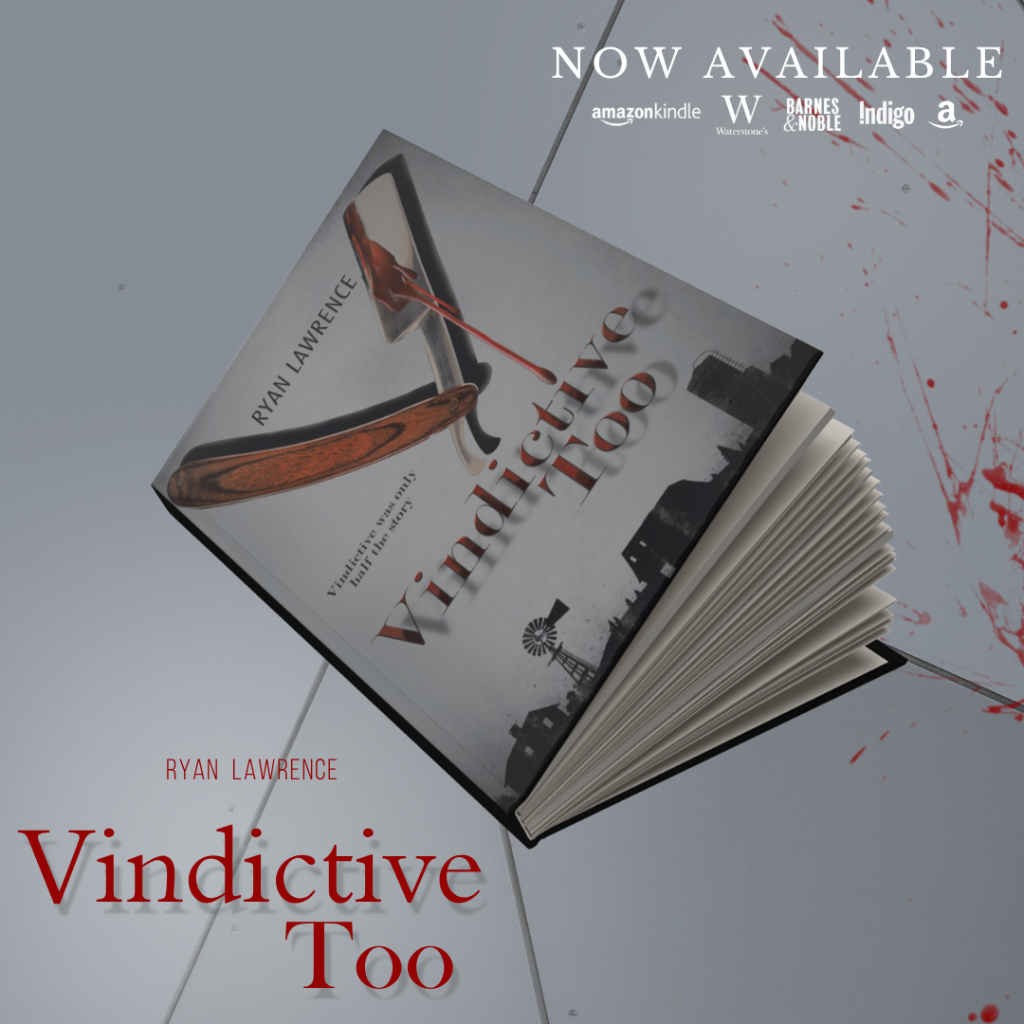
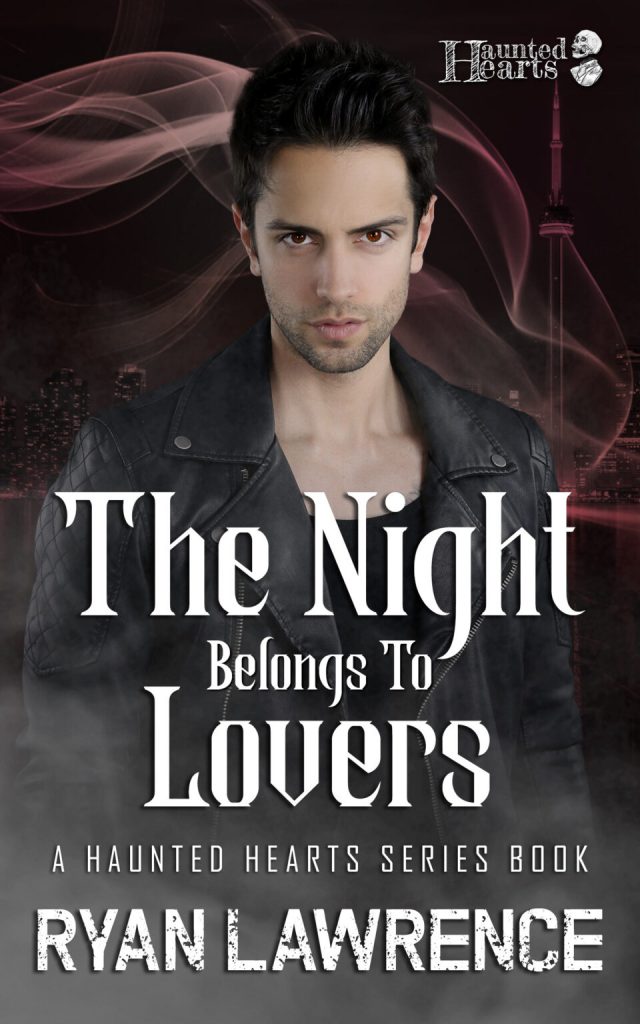
This month we’re shining a light on Ryan Lawrence, the author of Vindictive, Vindictive Too, and The Night Belongs to Lovers. He talks about the ups and downs of writing parallel storylines; what it means to create real, unapologetic queer characters in crime fiction; and how everything from vintage razors to pop culture references influence his work. Ryan opens up about his world of characters, what’s coming next, and what it takes to capture a readers imagination.
Writing from a place of unfamiliarity, from a place of creative guesswork, is a choice that comes with risk. Nowadays, readers are keen to sense forced, potentially contentious characterizations. I refuse to be this type of author.
Ryan Lawrence
Vindictive and Vindictive Too unfold over the same three-day period, but from different perspectives. What challenges did you encounter in writing parallel narratives?
Vindictive and Vindictive Too were originally one novel. I gave the first draft to my husband to read, and when he returned with his comments he’d missed a few key revelations. That was an issue. I had to accept that my opus needed to be reconfigured as two books to create better flow and read more coherently. Both major and minor storylines and characters needed more room to breathe or I risked other readers missing climactic elements too. Since two novels weren’t my original plan, I had to figure out how to separate individual storylines without compromising the overall connective narrative.
I needed to find a natural point of division to split my book into two and keep it cohesive. This would allow each part to tell its own complete story with a satisfying arc while still contributing to the overall narrative. I didn’t want to alter my timeline by making the second novel a sequel, pushing the events of that book forward, and having them occur after those of the first book. I wanted a companion novel. So, the three-day storyline would remain intact. The final chapter of book two occurs directly after the last chapter of book one, leading directly (well, 6 weeks later) into the third novel.
The foremost step was to determine that Jules’ storyline would be featured in the first novel while the primary focus of the second novel would be on Det. Declan James, the mysteries of the Morrison Farm, and the Berges—Jacque and Marie. I examined the interpersonal relationships among all the characters, placing those more directly involved in Jules’ revenge storyline in Vindictive.
To be honest, I didn’t find the process particularly challenging. I knew the key to properly managing multiple parallel storylines was to plan everything in advance and keep track of who said and did what, their locations, and future destinations, including whether they lived or died. Ultimately, to work this narrative weaving successfully, my organizational skills, patience, and perfectionism proved highly effective.
You’ve discussed the importance of queer representation in thrillers. How do you ensure your characters transcend stereotypes and offer authentic portrayals?
Multi-faceted diversification is what makes Queer Thrillers so enticing. It’s unlike all other Thriller sub-genres because it intentionally focuses on placing queer characters in situations where they can be active and complex protagonists or antagonists, not merely pitied, disposable victims. Or worse—one-dimensional villains characterized by offensively exaggerated mannerisms and affectations. Queer people exist in the world, in various places and societal positions, and with the capacity to do both good and evil.
I feel it’s perfectly acceptable to use a character’s sexuality or love life as a plot point—both positively, such as in romance, and for conflict, such as in narratives involving hate crimes or the kidnapping of a partner. However, it’s lazy, problematic writing to suggest that a character is miserable or evil because they’re queer, as if that explanation is the Rosetta stone of answers for LGBTQ+ stories involving trauma and villainy. I find that approach offensive and trite.
As an OwnVoice author, I write from a place of authenticity. Being gay/queer, I embrace my unique experiences, both painful and incredible, and utilize them to enrich my stories and diversify character personalities. I also do my research into the lives and experiences of other queer people because I cannot speak for every LGBTQ+ person; we all have different backgrounds and relationships to queerness, homophobia, and love. I look to see how I can weave the essence of their authentic selves into my work to avoid heteronormative and/or problematic narratives.
Writing from a place of unfamiliarity, from a place of creative guesswork, is a choice that comes with risk. Nowadays, readers are keen to sense forced, potentially contentious characterizations, language, and scene creation. Stereotyped characters come into existence this way—from a lack of respect for discovering who these people are, their lives, and their stories during the writing process. I refuse to be this type of author.
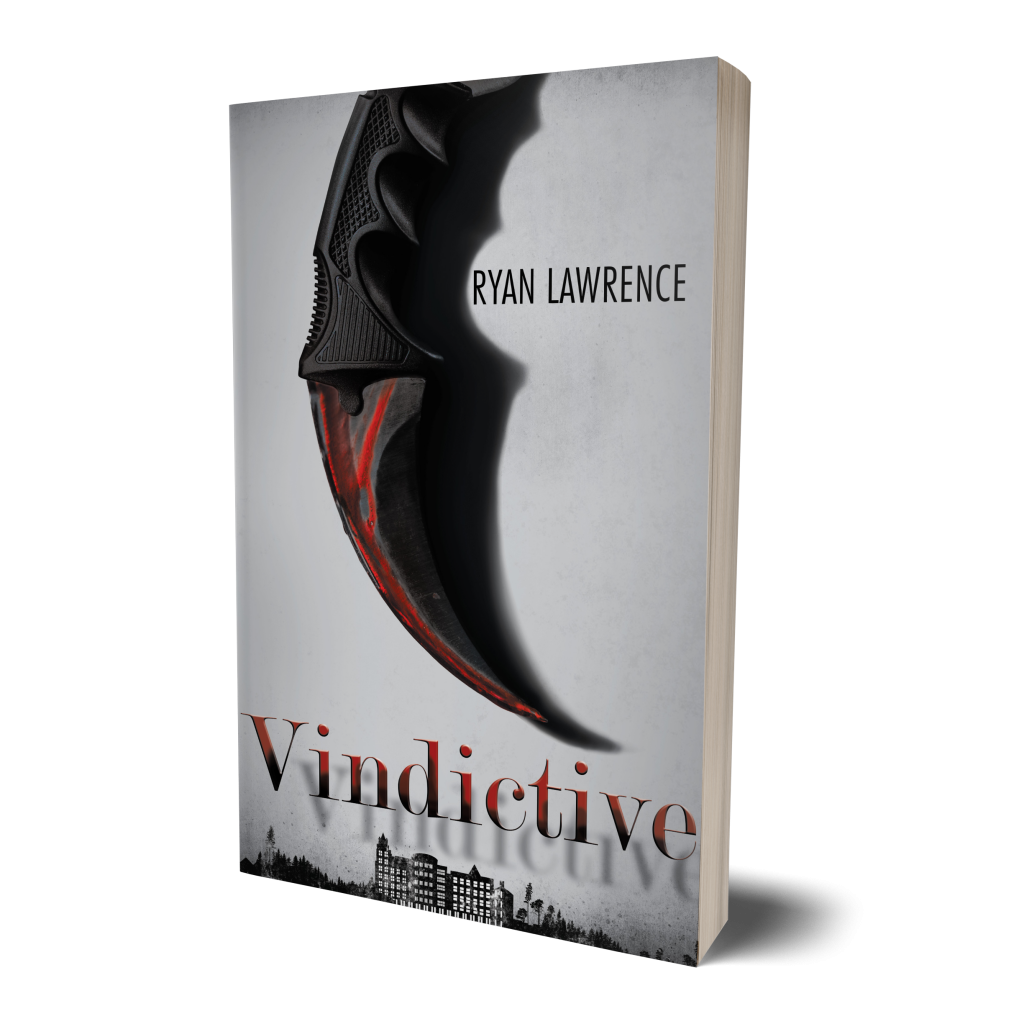
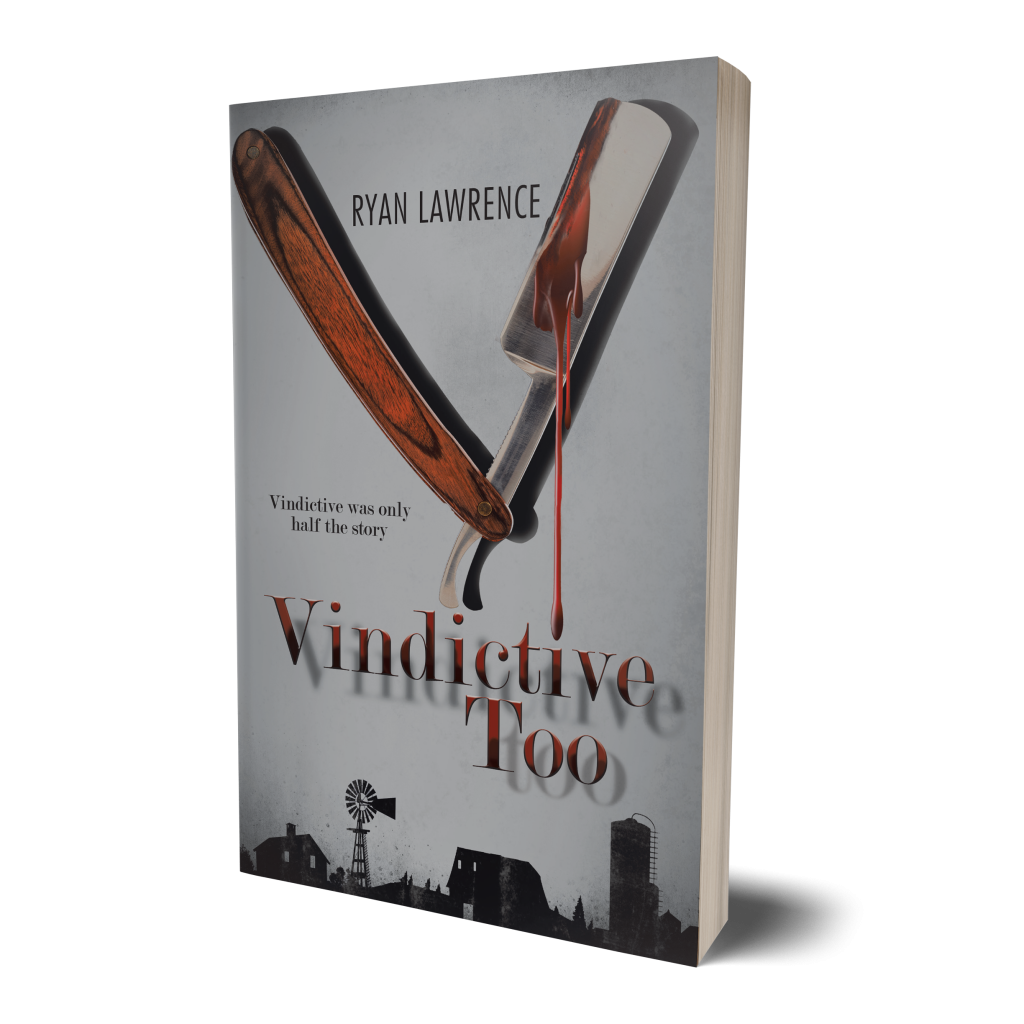
Your novels feature distinctive weapons on their covers, like the karambit and straight razor. How do these elements tie into the narratives, and what was the design process like?
Neither weapon was chosen in advance, though I knew a weapon would be pivotal to major scenes. I first crafted the scene, considering who would be wielding the deadly object and what their intentions with it were: fighting, self-harm or murder. With the karambit, I wanted a smaller fighting weapon that could be used simultaneously in both hands. I researched, looked online, whittled my idea down to blades, and settled on the karambit. It looked sleek yet rugged, a cool combination of military combat style and martial arts. The retro-style straight razor worked for the environment of the scene(s) and the historical context of the rural family it belonged to: the abuse and brutality.
The cover design process for Vindictive went smoothly. I provided a picture of the exact karambit I wanted and asked for a few tweaks: make it black and have the end not as hooked as it traditionally tends to be. It came out perfectly. I’ve had compliments from mixed martial artists regarding this cover! With Vindictive Too, the straight razor proved more of a trial, getting the vintage look—style and colour—just right for the cover. The shadowing effect is what connects the two covers, which I love. I initially had the blood on the karambit drop down to form the dot in the last “i,” and then I changed my mind and took it out. I regret that decision, as the blood on the razor looks killer (pun intended)! Hindsight is 20/20.
You’ve mentioned a passion for comic books. Have any specific comics or graphic novels influenced your writing style or themes?
I’ve been obsessed with superheroes since I was a toddler. I have around 20,000 comics in my collection. However, I can’t say that comic books have significantly influenced my writing style or themes. In Vindictive, Phillip loves comic books and, in one scene, wears socks featuring my favourite superhero: Nightwing. That’s pretty much it.
Now, television and print media? They’ve significantly influenced my themes and writing style. Shows like Twin Peaks and Revenge, along with the works of Anne Rice and Matthew Pearl, have been particularly impactful. I frequently turn to comics and superheroes to escape the world’s harsh realities, including the darker, more violent aspects of my writing. I enjoy the colourful and cheerful adventure stories from comic books that brought me joy as a child and continued into adulthood.
What has been the most surprising feedback you’ve received from readers about your work?
The most surprising aspect has been the characters that resonate with readers, particularly those I never expected to have such an emotional impact. One character who has truly stood out is Phillip; readers can’t stop talking about him! Sure, he’s your classic hunk, a Chris Hemsworth-type, but I never anticipated he would become as popular as he has. It never ceases to amaze me how certain characters can strike such a chord with people.
Can you share any details about upcoming projects or themes you’re excited to explore in future writings?
Last year, I participated in an OwnVoices project called Haunted Hearts, a supernatural gay romance series, with my ghostly, vampirish novel The Night Belongs to Lovers. This was my first stab at writing outside the Queer Thriller genre—and I loved it! We’re doing it again this year! My upcoming Haunted Hearts gay paranormal romance novel, the witchy I Will Always Find You, is set for an October 7th release. This project features some outstanding writing from several very talented gay/queer men.
Readers have been asking when the sequel to Vindictive and Vindictive Too is coming out. Admittedly, I’ve witnessed a few eye-rolls whenever I’ve said, “Soon—ish.” Well, I’m currently working on the third book now! No title yet, but I’m looking at an Autumn 2026 release. Yes, we are returning to Fairporte, Toronto, Jules, Phillip, Declan, Jacques, and poor Marie (poor, poor Marie) and all the blood, sex, and tears you can stomach in a Canadian revenge thriller (with queer content)! I’ve even connected my Gay Paranormal Romance books to the Vindictive series. How? Read closely and see! There are subtle clues in the Haunted Hearts books and a big one in the upcoming third Vindictive Series book.