The Award-Winning Memoirist of Being Broken, Honored by the New York Book Festival, New York Big Book Awards, BookFest, and the Nonfiction Writers Association for His Unflinching Exploration of Trauma, Addiction, and Recovery
…people suffering from NPD are victims as well. It’s not their fault that they turned out this way, but they are responsible for their actions. Once we can see them with this understanding, we can be more compassionate towards them, while still setting boundaries about what we will and will not tolerate.
Geoffrey R. Jonas
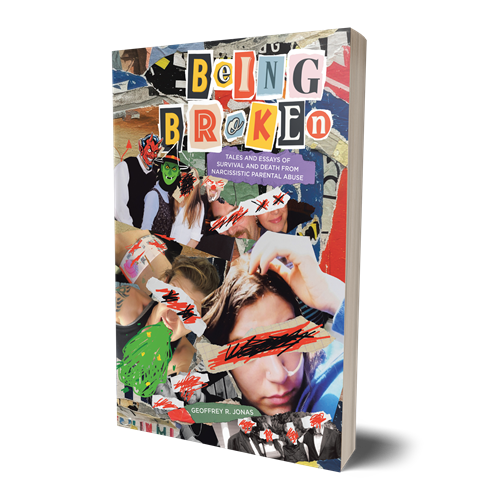
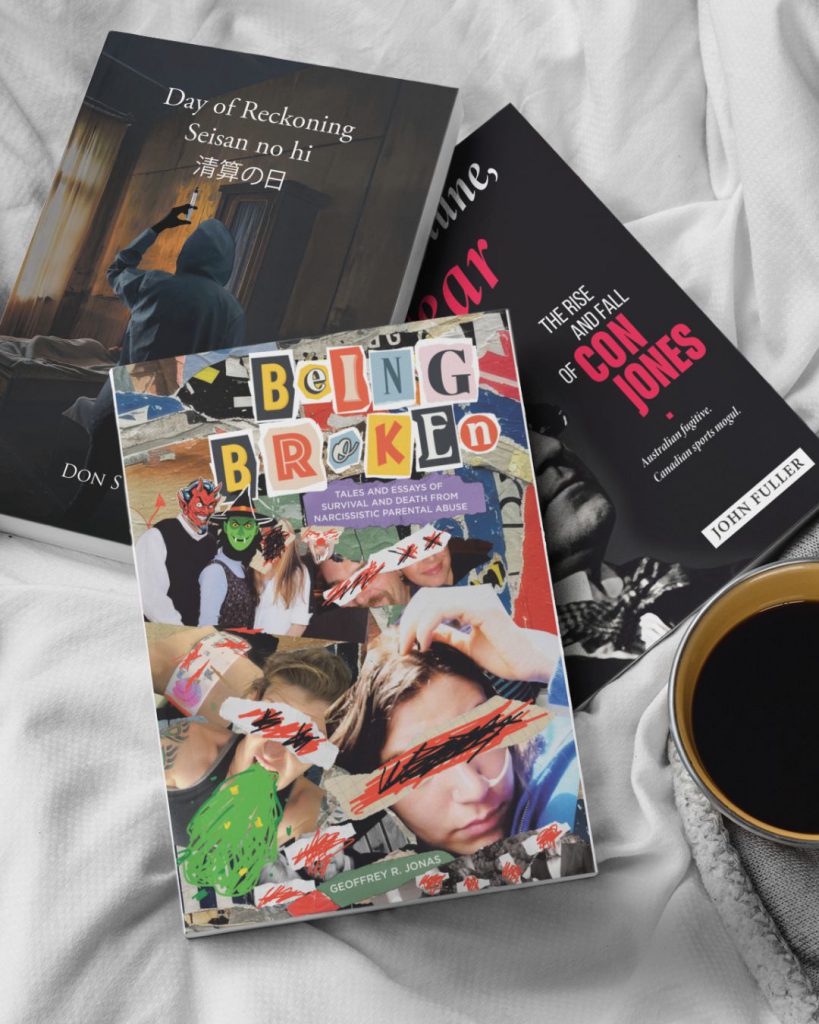
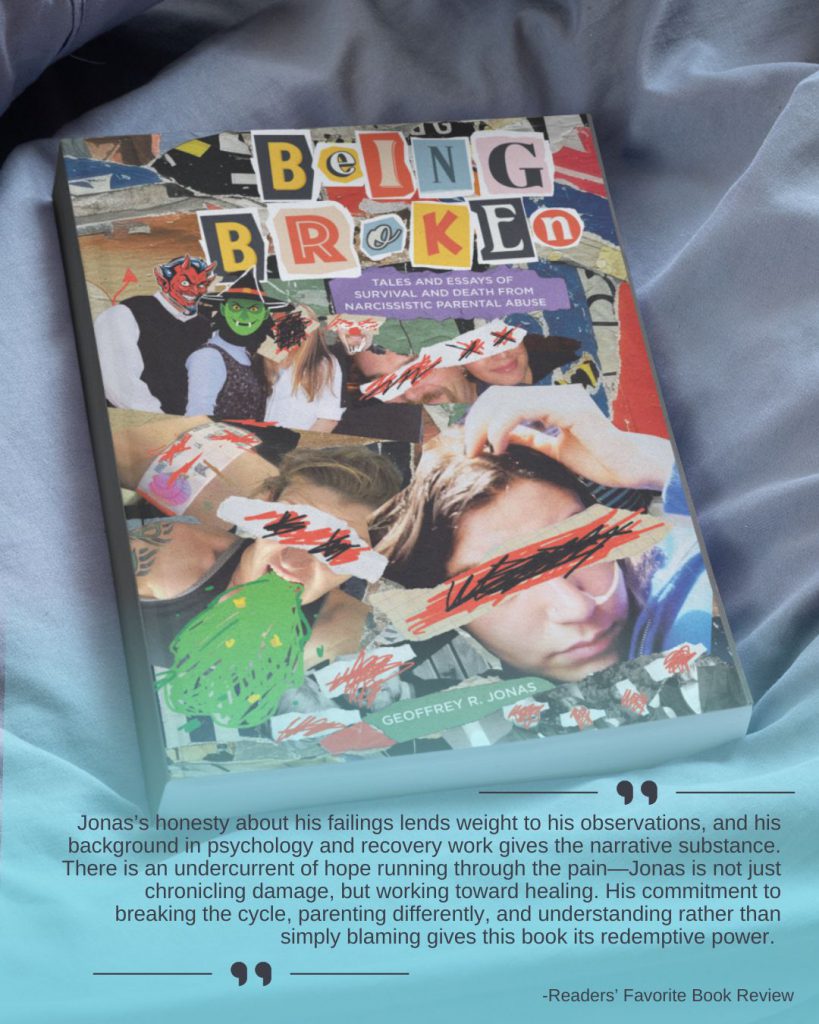
Geoffrey R. Jonas is our Tellwell Author of the Month, a new voice in nonfiction whose debut memoir has already made waves with readers and critics. His book, Being Broken, has earned numerous five-star reviews for its raw honesty, emotional depth, and compassionate exploration of trauma, addiction, and recovery. Since publication, Geoffrey has received an Honourable Mention at the New York Book Festival, was named a Distinguished Favourite at the New York Big Book Awards, placed third at the Nonfiction Writers Association Awards, and captured three second-place wins at BookFest across Health & Wellness, Psychology, and Mental Health categories. In this interview, Jonas reflects on the deeply personal journey behind Being Broken, the process of uncovering generational trauma, and the hard-won wisdom that has resonated so strongly with readers.
What inspired you to finally sit down and write Being Broken? Was there a specific moment when you realized this story needed to be told?
Simply put, the death of my sister. After her death, I had to understand how such a thing could happen. I had already been studying Substance Use Disorder (SUD) and trauma for many years; however, this was the first time I started looking directly into my family. The writing began as essays, discussing the abuse and trauma and how it relates to SUD. Once I started connecting the dots between trauma and SUD, I wanted to incorporate real-life examples of our experiences to better communicate that relation.
The book blends memoir with psychological insight. How did your background in recovery work and psychology shape the way you approached these deeply personal events?
I will start by clarifying that I am not a clinical psychologist. I hold no degrees, and I only took 2 years of psychology at university. While I am a certified facilitator for the SMART Recovery® program, I do not hold any further certifications in the recovery industry. I am a person of science and evidence though, so I dove headfirst into the studies, articles, and books related to these topics. I spent the equivalent, in years, of someone pursuing graduate studies, or even further, on both SUD and NPD. We also, however, need to understand the difference between knowledge and experience. You can study Narcissistic Personality Disorder (NPD) for years, know the trauma it can cause on victims, and be able to diagnose it in those suffering from it; however, unless you actually experience what it is like to be subjected to this kind of abuse, it is only that—knowledge. You can know fire is hot, but you do not truly understand it until you’ve been burned by it. It is the same with trauma and abuse. You can know all about it, read about it, study it, diagnose it; but, if you’ve lived through it, you now have the experience. My therapist called it ‘trauma wisdom’. To both know it and having experienced it give you this wisdom that many can’t comprehend. This allowed me to write about it from both the inside and the outside.
Readers describe the book as raw, unflinching, and honest. How did you balance telling painful truths with maintaining compassion for your family members?
The chapter “Fault vs. Responsibility and Blame” in my book covers this. It is very important to understand that many people suffering from NPD, or many other disorders, are victims themselves. The disorder is a behavioural adaptation based on their own traumas and abuse they experienced, typically as children. Excavating my parents’ history allowed me to see them as the abused children they were, and to forgive them for what is not their fault. However, I still hold them fully responsible for their behaviour towards us. Treating someone abusively is always a choice. Too often, people do not take responsibility for their hurtful actions towards others, blaming their disorders for their behaviour. There are so many people out there who have suffered trauma and abuse who do not continue the cycle of abuse, who choose to be better. And if they cannot take responsibility, apologize, and alter their behaviour so they do not repeat that harmful behaviour, there is no need to forgive to move forward. This is what is happening with my mother. I am no contact with her; she refuses to take responsibility for her part in the abuse of me and my sister. I’ve moved on without the need for forgiveness, but I still feel compassion for what she went through as a child.
Narcissistic Personality Disorder plays a major role in your book. What misconceptions about NPD do you hope this book helps clarify?
I’ve been following a lot of NPD survivor groups, so I am aware of many misconceptions out there about people with this disorder. The big one that I see often is that people with NPD are just evil, don’t feel emotions, and are unredeemable. While there are some sociopathic types of NPD, such as Machiavellian and severe malignant NPD, where the abuse can be terrible, there are also milder forms of NPD that can be subtle and non-violent. This doesn’t negate the damage emotional and psychological abuse can impart on victims of milder forms of NPD, however. As mentioned in my previous response, most, if not all, people suffering from NPD are victims as well. It’s not their fault that they turned out this way, but they are responsible for their actions. Once we can see them with this understanding, we can be more compassionate towards them, while still setting boundaries about what we will and will not tolerate. They are people who do feel emotions, they just do not have the tools to manage those emotions and the subsequent negative behaviour because they didn’t have the proper support to develop positive responses to those emotions as children.
You uncovered many family secrets through letters, notes, and digital correspondence. Was there anything you discovered in that process that fundamentally changed your understanding of your past?
Like stepping into the sun after a life in the dark. When you live your whole life with familial abuse, without any kind of comparison to how normal families behave, you do not understand that it is abuse; this kind of family life is perceived as how families behave. Seeing the videos, reading the texts and letters, and learning my parents’ family history gave me an understanding of who they were as abused little children and how easy it is to repeat generational cycles of abuse. It was like a spotlight turned on, and everything was exposed to the light. Memories, suppressed or denied, opened like doors in an endless hallway. Everything about my childhood was relived through newly tinted glasses, where I could see that how we were treated as children was not our fault, nor was it normal. This allowed me to forgive myself for my part in the destruction of my family and improve myself as a person, especially as a father.
What were your biggest takeaways about the publishing process when working with Tellwell? Were there any unexpected lessons learned making your first book?
That you really need to do your research to find the right company to assist you with publishing your book, especially if you’re self-publishing. There are so many scams and misleading platforms out there trying to get your money for subpar production of your book. Tellwell was easy and straightforward with the process, not to mention quick, at a very reasonable cost. However, I think the biggest lesson was about the marketing aspect of the book. Submitting for reviews and awards, promotional materials and social media, and organizing interviews such as this one, can all take a lot of time and can add up in cost very quickly. If you do not consider, and budget for, the marketing aspect of publishing, you’re not going to sell many copies.