Exploring the mystery of Mozart’s music, the genius of Marie Anne, and the research behind a groundbreaking new documentary.
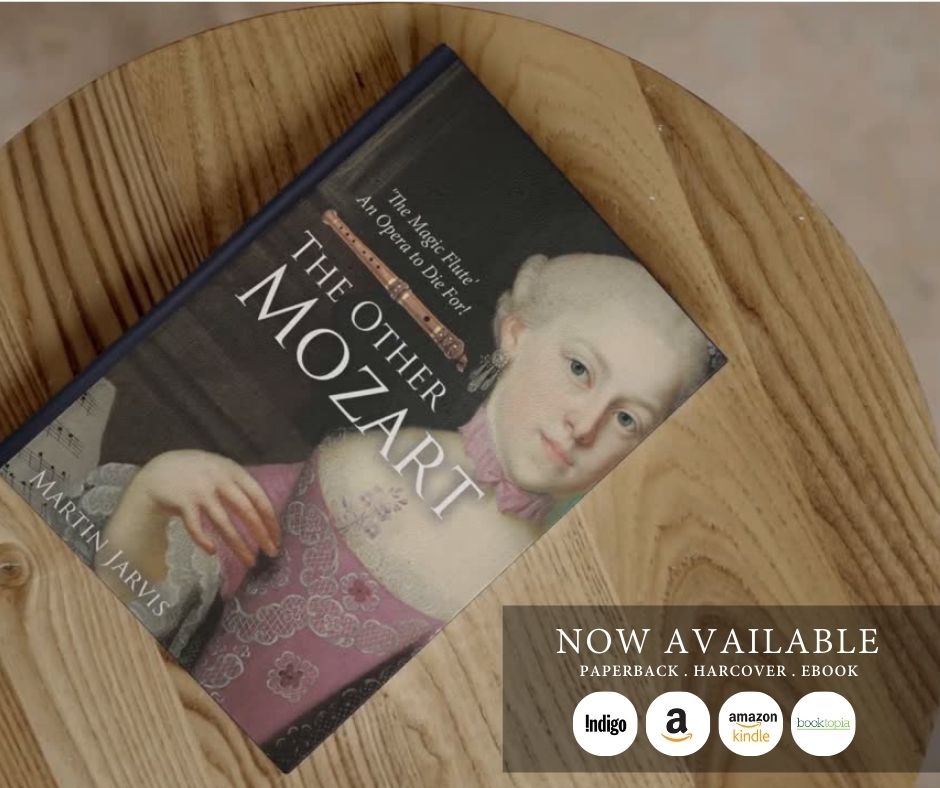
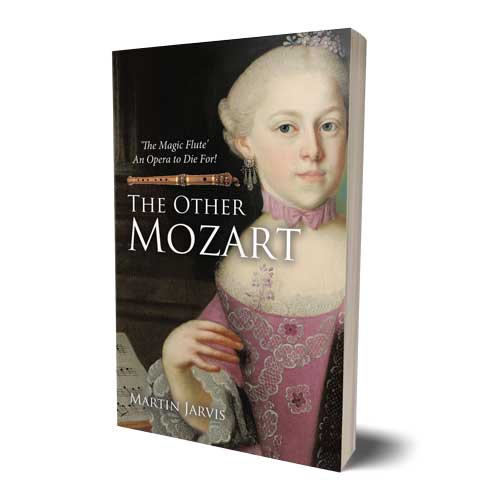
Tellwell Publishing is pleased to highlight Dr. Martin W. B. Jarvis, a scholar who has spent much of his career challenging long-held assumptions about the great composers. His newest novel builds on years of forensic handwriting research and offers a fresh look at Mozart’s life, his music, and the mystery surrounding his final days. The book was also selected for the Publishers Newswire Books to Bookmark list for its unique approach and lively investigation into music history.
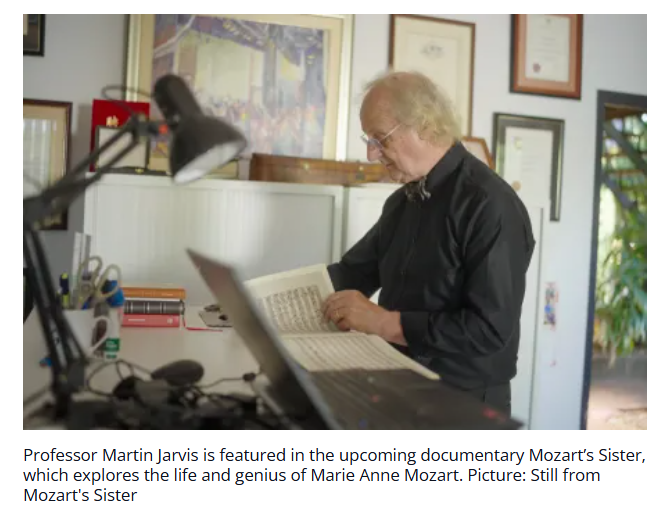
Dr. Jarvis’s research is now reaching an even wider audience through the upcoming Sky Originals documentary Mozart’s Sister. The film explores the life and talent of Marie Anne Mozart, who performed with her brother as a child and, as Jarvis argues, may have been the creative voice behind several works traditionally credited to Wolfgang. His involvement in the documentary grew out of work that began when he was only fourteen and studying Mozart’s Violin Concerto No. 2. Even then he sensed something unusual in the score, a curiosity that led him to decades of study and the discovery of distinct handwriting traits on key manuscripts.
In the documentary, Jarvis explains how signatures like “W. A. Mozart” differ from those written as “Amadeo Wolfgango Mozart,” and how this evidence points to Marie Anne composing under a different name. The film also highlights the broader history of women in composition, a subject Jarvis has explored before in his research on Anna Magdalena Bach. That earlier work became the book Written by Mrs Bach and later a BBC documentary, which brought even more attention to the hidden role of female composers.
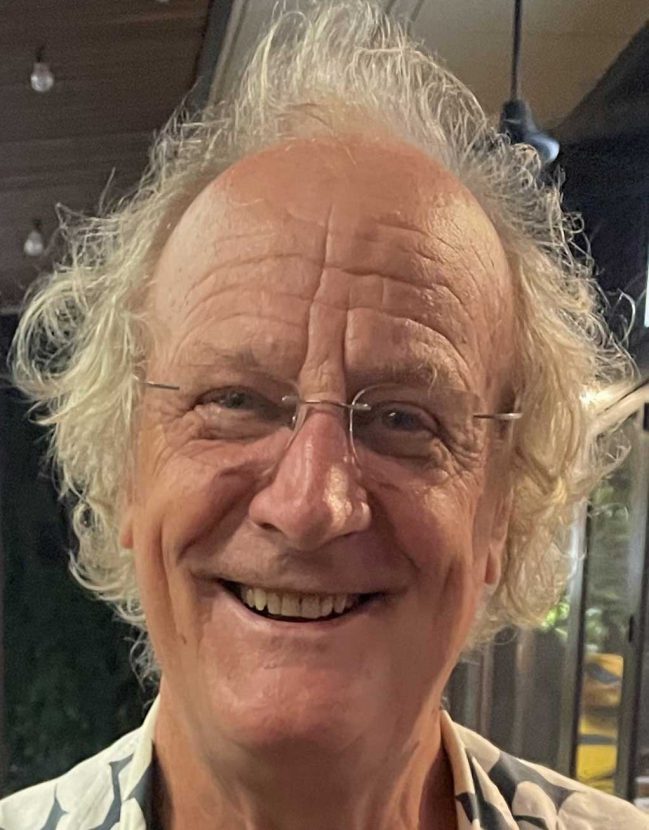
Dr. Jarvis is a professor at Charles Darwin University and a respected forensic handwriting expert. His work blends science, history and careful investigation, and it offers a compelling invitation to reconsider the stories we think we know.
Below, Dr. Jarvis discusses the inspiration behind his novel, the evidence that challenges long-accepted beliefs and the discoveries that continue to reshape our understanding of the Mozart family.
Some people are happy that at last Marie Anne Mozart is getting recognition, while others go into typical and sometimes hysterical denial, believing that she was not capable of composing any music.
Dr. Martin W. B. Jarvis
People think of Mozart as a solitary genius, but you propose that Marie Anne Mozart may have been the true creative force behind some works attributed to her brother. What evidence led you to this hypothesis? How receptive have people been to this revelation?
The evidence that supports the proposition that Marie Anne Mozart was the composer of some of the pieces of music attributed to her younger brother comes from the handwriting on some of the manuscripts. All the evidence on the manuscripts that were signed by a person called “Amadeo Wolfgango Mozart” clearly points to Marie Anne as the composer.
People have reacted differently when faced with the evidence. Some people are happy that at last Marie Anne Mozart is getting recognition. While other people (particularly musicians) go into typical, and sometimes hysterical, denial, believing that Marie Anne was not capable of composing any music, so she was just copying her brother’s music. Yet we know that Marie Anne composed because Wolfgang Mozart compliments her compositional skills in some of his letters to her.
Can you explain how your expertise in forensic handwriting analysis informed your research for the book?
Forensic handwriting examination is a science—it is actually the oldest of the forensic sciences. So, there is a great deal of scientific data that supports the conclusions of a handwriting examination. Forensic handwriting examination is based on the habits of the writer; these habits are created during the handwriting-learning process. Because handwriting habits are unconscious, any given writer has identifying features in their handwriting that can be spotted by an expert, and this is how forgeries are discovered. Consequently, we could identify that Marie Anne Mozart had written both “Amadeo Wolfgango Mozart” and “Wolfgango Amadeo Mozart” on various manuscripts.
In handwritten music manuscripts, the handwriting (music calligraphy) of a given composer reveals their habits or writing traits; these can be detected by the trained examiner. In the case of Wolfgang and Marie Anne Mozart’s manuscripts we found significant differences in the execution of their music-calligraphy, which eventually led to our conclusion that Marie Anne had composed some of the music attributed to her brother.
Your book suggests that Mozart’s final opera, The Magic Flute, was Rosicrucian rather than Masonic. How did you come to this conclusion?
The Rosicrucian (Rosie Cross) Brotherhood was a secretive organization founded in the seventeenth century. It was a Protestant religious society interested in the study of metaphysical, alchemy and the mystical. At some point in the eighteenth century, the brotherhood infiltrated the Masonic movement. And in the Scottish Rite, the eighteenth degree is known as the “Rose Croix” (Rose Cross). An analysis of the characters and settings in the opera The Magic Flute make it clear that the supposedly Masonic elements are there to deliberately hide the true Rosicrucian Brotherhood ideals within the opera.
The novel raises questions about whether Mozart was murdered due to his connections with secret societies. How did you navigate speculation versus documented evidence?
The idea that Mozart was murdered is not at all new to my novel, nor is it a new idea in any way. The fact is that by the mid to late 1790s the composer Antonio Salieri was accused of killing Wolfgang Mozart. Salieri denied any involvement in Mozart’s death right to the end of his life in 1825. By the way, this accusation was the basis for Peter Schaefer’s play Amadeus, which became the movie of the same name. In the movie Mozart is depicted as an idiot, which he most certainly was not.
Other authors have suggested different reasons for his probable murder. For example, Wolfgang’s theft of other composer’s music and Wolfgang’s philandering with other men’s wives offer different possible candidates for being the suspected murderer.
My novel takes a much easier path to explain his murder—it was politically motivated. That is to say, it was Wolfgang’s involvement with the Prussian king, and the king’s connections to the Rosicrucian Brotherhood that led to Wolfgang becoming identified as an enemy of the state of Austria, and, therefore, an enemy of the Austrian emperor who was also the Holy Roman emperor.
What was the most surprising or unexpected discovery you made while researching Mozart and his family?
I think that the most surprising discovery that we made during the research was that Wolfgang Mozart, for some unknown reason, did not sign the manuscripts of his most famous works. There is no Mozart signature on the manuscripts below that I have access to:
Symphony 38 KV 504
Symphony 40 KV 550
Symphony 41 KV 551
Piano Concerto KV 488
Piano Concert KV 491
The opera The Marriage of Figaro KV 492
The opera The Magic Flute KV 620
The Requiem KV 626
Eine Kleine Nachtmusik KV 525
Rondo for Violin KV 261a
Horn Concerto in E flat KV 447
String Quartet in D KV 575
The five Violin Concertos KV 207, 211,216, 218 and 219
The only manuscript I have found that he signed was his last completed work, A Little Masonic Cantata. He signed “W A Mozart” and dated it “Nov 15 [17] 91.”
What did you choose to self-publish? And how was your experience working with Tellwell?
Before selecting Tellwell to publish my novel, I had looked around at other similar companies, but Tellwell stood out. My son Tim owns one of the largest independent bookstores in Australia: Fullers Bookshop in Hobart. So, I then checked with Tim about my plan to self-publish my novel, and he had very good things to say about Tellwell, so I made contact with the company. With Tellwell, I found myself working with a very professional editorial team, who provide excellent advice and ideas. But most importantly for me, in the end I have total editorial control. In Tellwell I also had the opportunity to work with other excellent professionals, operating in the design field, as well as experts in the distribution and marketing support areas.